All Products
How to choose an authentic Trappist beer
The «Authentic Trappist Product» mark is not a quality award: it certifies origin. To display it, a beer must meet three criteria set by the International Trappist Association in 1997. It must be brewed within the walls of a Trappist monastery, by the monks or under their direct supervision. The brewery must remain secondary to monastic life. And the income must cover the community's upkeep, with any surplus going to charitable works. None of these criteria concerns taste. A beer can be excellent without the logo, and the logo is no guarantee you will enjoy it.
The list of certified breweries changes more often than most people realise, which is why many online guides are now unreliable. Achel lost the mark in 2021 when the last monk left the abbey, and in 2023 it lost Trappist beer status altogether after the monastery was sold to a private owner. The American brewery at Spencer, the first and only one outside Europe, closed in 2022. If you are reading an article that still counts twelve active Trappist breweries, you are reading an outdated list.
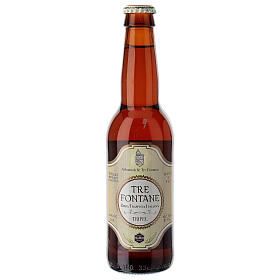
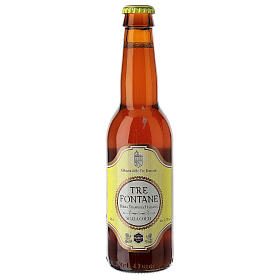
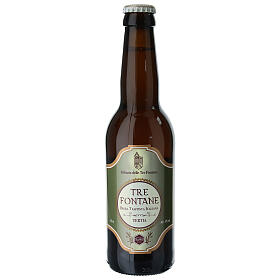
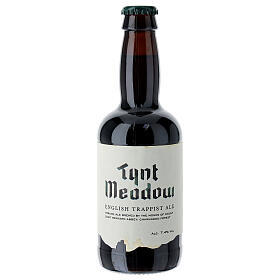
The historic reference points remain the five Belgians — Westmalle, Westvleteren, Chimay, Orval, Rochefort — and the Dutch La Trappe, brewed at Koningshoeven Abbey. Two smaller and more recent additions have joined them: Tre Fontane, which since 2015 has brewed a blond in Rome spiced with eucalyptus from the abbey grounds, and Tynt Meadow, the first British Trappist, launched in 2018 at Mount Saint Bernard Abbey in Leicestershire. Mont des Cats, often included in such lists, is Trappist-owned but is physically brewed at Chimay, which is why it carries no ATP logo.
On style, the nomenclature tells you almost everything about structure. Enkel (or patersbier) is the light beer, historically brewed for the monks themselves. The Dubbel, born at Westmalle in 1856, is a brown ale around 6-8% with dried fruit and caramel. The Tripel, also developed at Westmalle in the 1930s, is a strong blond between 8 and 10% with a dry finish. Quadrupel, a term coined by Koningshoeven, denotes the darkest and strongest versions: Rochefort 10 and Westvleteren 12 belong to this family. Rochefort instead uses its own numbering (6, 8, 10) and Chimay a colour code in ascending strength: red, white, blue.
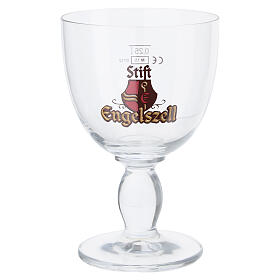
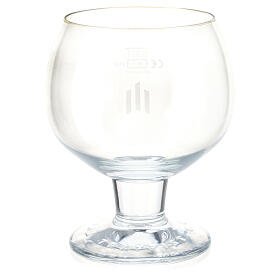
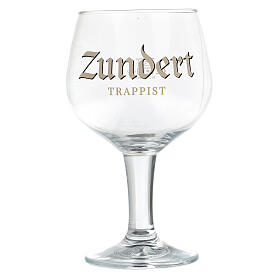
One practical note matters more than the label you choose: nearly all these beers are bottle-conditioned. A veil of live yeast settles at the bottom. Store the bottle upright, serve at 10-12 °C rather than fridge temperature, and pour in a single continuous motion into a wide chalice, stopping when the sediment reaches the shoulder of the bottle. A Trappist served ice-cold and poured badly loses much of what you paid for.
13 products found
Frequently asked questions about trappist-beers-and-monastery
Answers to the most common questions from our readers. Tap a question to read the answer.
Only beers brewed inside a Trappist monastery, under the supervision of the monks, and with profits dedicated to charity can carry the "Authentic Trappist Product" label. The roster changes over time: the historic reference points are the five Belgian breweries Chimay, Orval, Rochefort, Westmalle and Westvleteren, the Dutch La Trappe (Koningshoeven Abbey), Tre Fontane in Rome and Tynt Meadow from Mount Saint Bernard Abbey in England. Achel lost the label in 2021 and its Trappist status in 2023, while the American Spencer brewery closed in 2022. Mont des Cats is Trappist-owned but brewed at Chimay, which is why it does not carry the ATP logo.
Trappist beer is physically brewed inside a Trappist monastery, by or under the control of the monks, with non-profit revenue. Abbey beer is a style: it is produced by commercial breweries under license from an abbey or simply inspired by monastic recipes, with no requirement of direct monastic origin.
Westvleteren is sold by the monks of Saint-Sixtus Abbey in Vleteren (Belgium) in limited allocations, on phone booking and on-site pickup. Bottles available online come from authorized resellers or private collectors. TrappistDeals tracks current availability across trusted channels.
Yes — strong dark Trappist beers (Quadrupels such as Rochefort 10 or Westvleteren 12) keep evolving for years thanks to bottle refermentation and live yeast. Store them upright, in the dark, at 10–14 °C, away from odors, vibrations and heat.