All Products
Monastic chocolate: what to look at before the price
Chocolate reached European monasteries by a curious route. Introduced through the missions in the Americas, it became the subject of a long theological debate in the sixteenth and seventeenth centuries: did the cocoa drink break the fast or not? The question, argued all the way to Rome, was settled in favour of permissibility, and monasteries became places where cocoa was worked with real competence. Today's monastic confectionery descends from that artisanal tradition.
The cocoa percentage is the most displayed figure and the most misunderstood. It indicates the sum of cocoa mass and cocoa butter as a share of the total, but says nothing about the quality of the beans or the ratio between the two components. A 70% dark chocolate built on generous cocoa butter is soft and rounded; another, also at 70% but with more cocoa mass, is dry and bitter. This is why two bars showing the same number can taste opposite. The percentage indicates intensity, not a score.
The ingredient genuinely worth seeking is cocoa butter as the only fat. European regulation permits up to 5% of alternative vegetable fats — shea, illipe, palm — without the product losing the name «chocolate». A chocolate listing only cocoa butter is built differently and generally costs more for raw-material reasons. Equally, the presence of soy lecithin is not a defect: it is an emulsifier used in minimal doses to stabilise flow, present in excellent products too.
A useful distinction between dark, milk and white. Dark chocolate contains cocoa mass, cocoa butter and sugar, and above 60% becomes markedly bitter. Milk chocolate adds milk powder and has much lower cocoa percentages, typically between 30 and 40%. White chocolate contains no cocoa mass at all, only cocoa butter, sugar and milk: technically it is chocolate, but it has none of the aromatic profile of roasted cocoa, which is why it divides opinion.
In storage, the enemy is not heat itself but temperature swing. Chocolate should be kept between 16 and 18 °C, somewhere dry and away from strong-smelling foods, because cocoa butter absorbs odours very readily. The fridge is the worst choice: humidity brings sugar to the surface and creates the whitish film called sugar bloom. There is also fat bloom, caused by cocoa butter migrating after warming. In both cases the product is edible and safe, but the structure and the way it melts in the mouth are already compromised.
3 products found
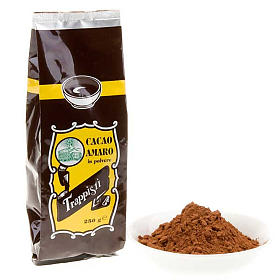
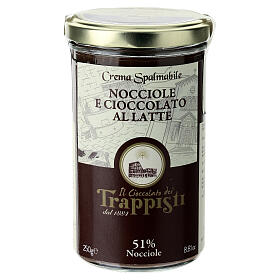
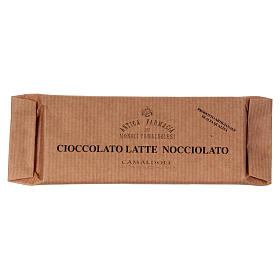
Frequently asked questions about trappist-chocolate
Answers to the most common questions from our readers. Tap a question to read the answer.
Monastic chocolate is made in small batches from traceable cocoa, often fair-trade, processed at low temperatures to preserve aromas and nutritional value. Recipes often include local ingredients: honey, almonds, medicinal herbs, essential oils and liqueurs from the abbey itself.
Milk chocolate: 30–45% cocoa, sweet and suitable for kids. Classic dark: 50–70%, balanced. Extra dark: 70–85%, intense with less sugar. Above 85% the taste becomes markedly bitter — best for confirmed dark-chocolate lovers or pastry use.
Store chocolate at a constant 14–18 °C, in a dry, odor-free place. Avoid the fridge: condensation can cause sugar bloom (whitish patina). In its sealed packaging it lasts 12–18 months; keep bars in their original wrapper.
Dark chocolate with at least 70% cocoa is rich in polyphenols (notably flavanols) linked to cardiovascular well-being and mood. Consume in moderation (10–20 g per day) — it remains calorie-dense. Choose single-origin chocolate without added vegetable fats.