All Products
Honey and hive products: how to read the label
Monastic beekeeping has a concrete historical reason that precedes food use: it supplied wax, not honey. Liturgical candles required pure beeswax in considerable quantities, and every monastery needed an apiary in order not to depend on outside suppliers. Honey was, originally, the by-product. It is also why this category often puts candles, tapers and beeswax cosmetics alongside the jars.
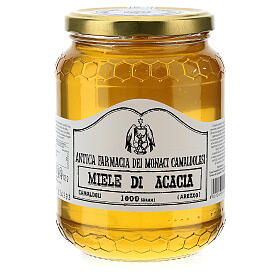
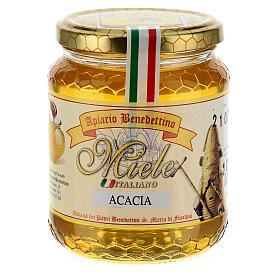
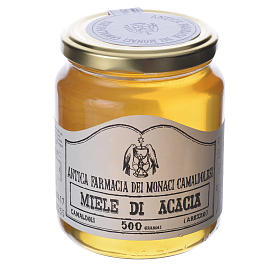
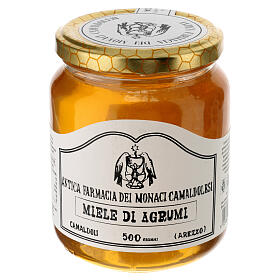
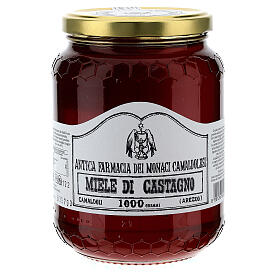
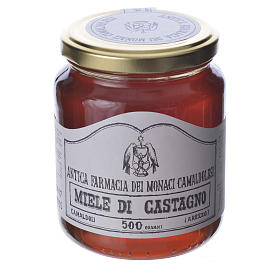
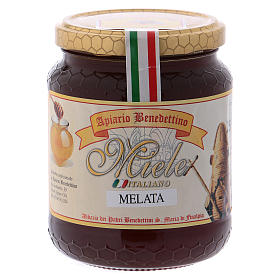
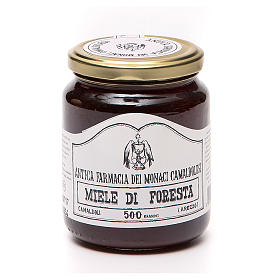
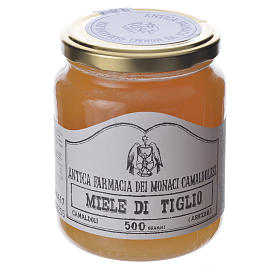
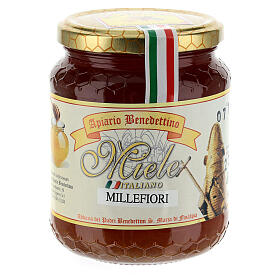
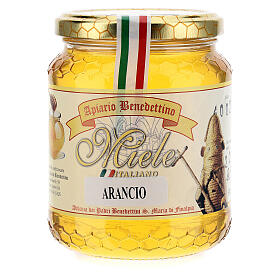
The first distinction to make is between monofloral and wildflower honey. Monofloral honey comes predominantly from the nectar of a single species and has predictable characteristics: acacia stays liquid for a long time and is delicate and low in perceived sweetness; chestnut is amber, tannic and decidedly bitter; lime is balsamic; honeydew honey, which comes not from nectar but from aphid secretions, is dark, barely sweet and rich in minerals. Wildflower honey changes from apiary to apiary and season to season, and is the product that best expresses a particular place.
Crystallisation is where most of the confusion sits. Honey that sets is neither spoiled nor adulterated with sugar: it is doing exactly what its composition dictates. Honeys rich in glucose, such as dandelion and sunflower, crystallise within weeks; those rich in fructose, such as acacia, can stay liquid for years. A honey that remains perfectly liquid after a long time and is not acacia or honeydew has more likely been pasteurised than it is unusually fine. To return it to a fluid state, stand the jar in warm water below 40 °C: above that threshold, enzymes and aromas degrade.
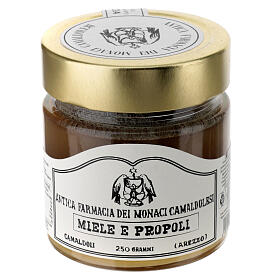
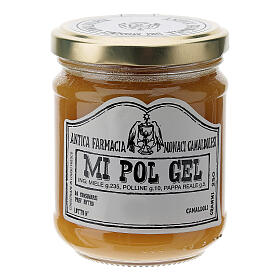
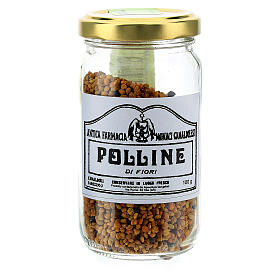
Alongside honey you will find propolis, pollen and royal jelly. Propolis is a resin the bees gather and use to seal the hive, sold as a hydroalcoholic extract or spray. Pollen comes as granules. Royal jelly is the secretion destined for the queen and must be kept refrigerated. A considerable amount of health claim circulates around all three: European regulation has not authorised health claims for any of them, and anyone allergic to pollen or bee products should treat them with caution. They are foods, not therapies.
For storage a few rules suffice: jar closed, dry place between 10 and 20 °C, away from heat and from strong-smelling foods, because honey absorbs odours. The fridge is unnecessary and in fact accelerates crystallisation. Always use a dry spoon: water introduced into the jar is the one realistic way to make honey ferment.
27 products found

Frequently asked questions about bee products
Answers to the most common questions from our readers. Tap a question to read the answer.
Abbeys with their own apiary typically offer monofloral honey (acacia, lime, chestnut, wildflower), pollen, royal jelly, propolis (tincture or spray), beeswax for candles and cosmetics, and fermented mead. These products are traceable, cold-extracted and never blended with industrial honey.
An authentic monastic honey carries the name of the producing abbey on the label, the batch, the specific blossom and the geographical origin. It crystallizes naturally over time (a sign of raw, unpasteurized honey) and contains no added sugars or syrups.
Propolis is a resin collected by bees from plant buds and used to seal the hive. It is known for its balsamic properties and support for the respiratory tract. You can find it as an alcoholic tincture (a few drops in lukewarm water or under the tongue), as a throat spray or in lozenges. Not recommended if you are allergic to bee products.
Honey keeps at room temperature in a closed jar, away from light: it lasts for years and crystallization is natural. Pollen should be refrigerated or frozen if fresh. Fresh royal jelly must be kept refrigerated (2–8 °C) and used within a few months; freeze-dried jelly is shelf-stable.