How to Taste a Trappist Beer: Glasses, Temperature, and Pairings
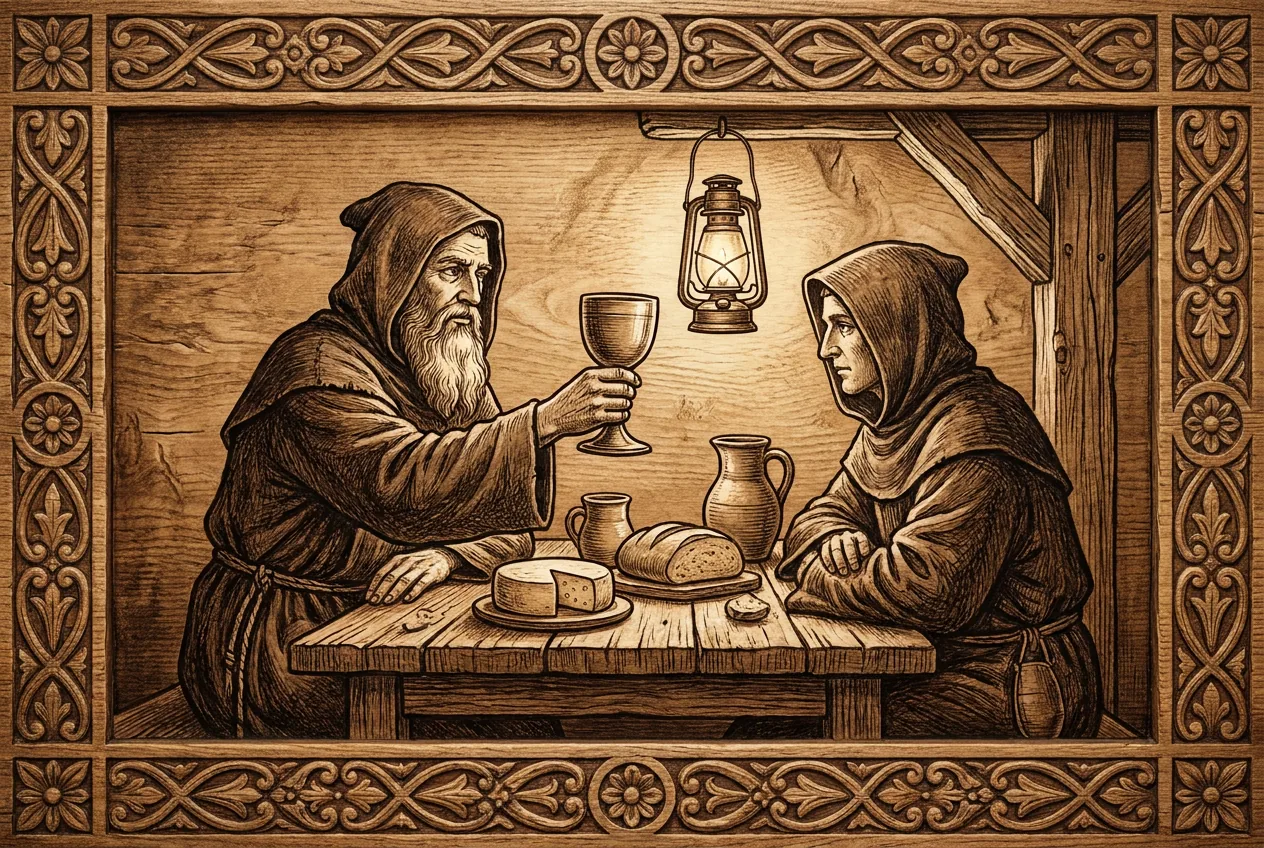
There's a silent way to ruin a Trappist beer: pulling it out of the fridge ice-cold, opening it distractedly, and drinking it straight from the bottle in front of the TV. Nothing dramatic happens—it's still a good beer—but you miss almost all the work that went into it. These beers are bottle-conditioned, often high in alcohol, and built on yeasts that produce aromas of dried fruit, banana, clove, and bread crust. These are volatile aromas: they need space, warmth, and a glass to collect them. The good news is that you don't need a sommelier course to serve them well, just four simple tips: the glass, the temperature, the pouring method, and what you put on your plate alongside it. Let's look at them one by one.
The Right Glass: Why Shape Changes Flavor
The glass isn't just for collectors. Abbey and Trappist beers are almost always served in a wide-bowled goblet with a stem, and there's a precise reason: the broad bowl allows the beer to oxygenate and gives aromas space to release, while the slightly inward-curving rim concentrates them towards the nose instead of dispersing them. The stem is for holding the glass without warming it with your palm, a detail that's far from secondary for beers meant to be sipped slowly. A straight, narrow mug, on the other hand, compresses the foam and flattens the aromatic profile: you'll mostly taste the alcohol.
Practical rule: if you only have one good glass at home, choose a tulip or balloon glass of about 33-40 cl, large enough to hold the entire bottle plus three fingers of foam. It must be perfectly clean and free of detergent or grease residues, because even an invisible film will kill the head in seconds. Rinse it with cold water before pouring: the film of water helps the head form compactly and last. And avoid chilling the glass in the freezer, a habit that's fine for a light lager but terrible for a Trappist.
Temperature: Neither Icy Cold Nor Lukewarm
Cold numbs the senses. Below 6 °C, the palate primarily perceives carbonation and bitterness, while fruity esters and spicy yeast notes remain locked in. Lighter, clearer Trappist beers, like blondes or patersbiers, are best between 6 and 8 °C. Dubbels, amber and malty, are good around 8-10 °C. Tripels call for 8-12 °C, while quadrupels and more robust dark beers can comfortably reach 12-14 °C: these are beers to be approached almost like a red wine.
In practice: take the bottle out of the refrigerator about twenty minutes before opening it, if your fridge is set to the classic 4-5 °C. And don't anxiously chase the thermometer—the beer will warm up in the glass as you drink it anyway, and that's where the interesting part happens. A good exercise is to taste the same glass three times, ten minutes apart: the first sip will be crisp and dry, the last round and sweet with malt. The same beer tells different stories at different temperatures.
Pouring Without the Sediment: The Gesture That Makes All the Difference
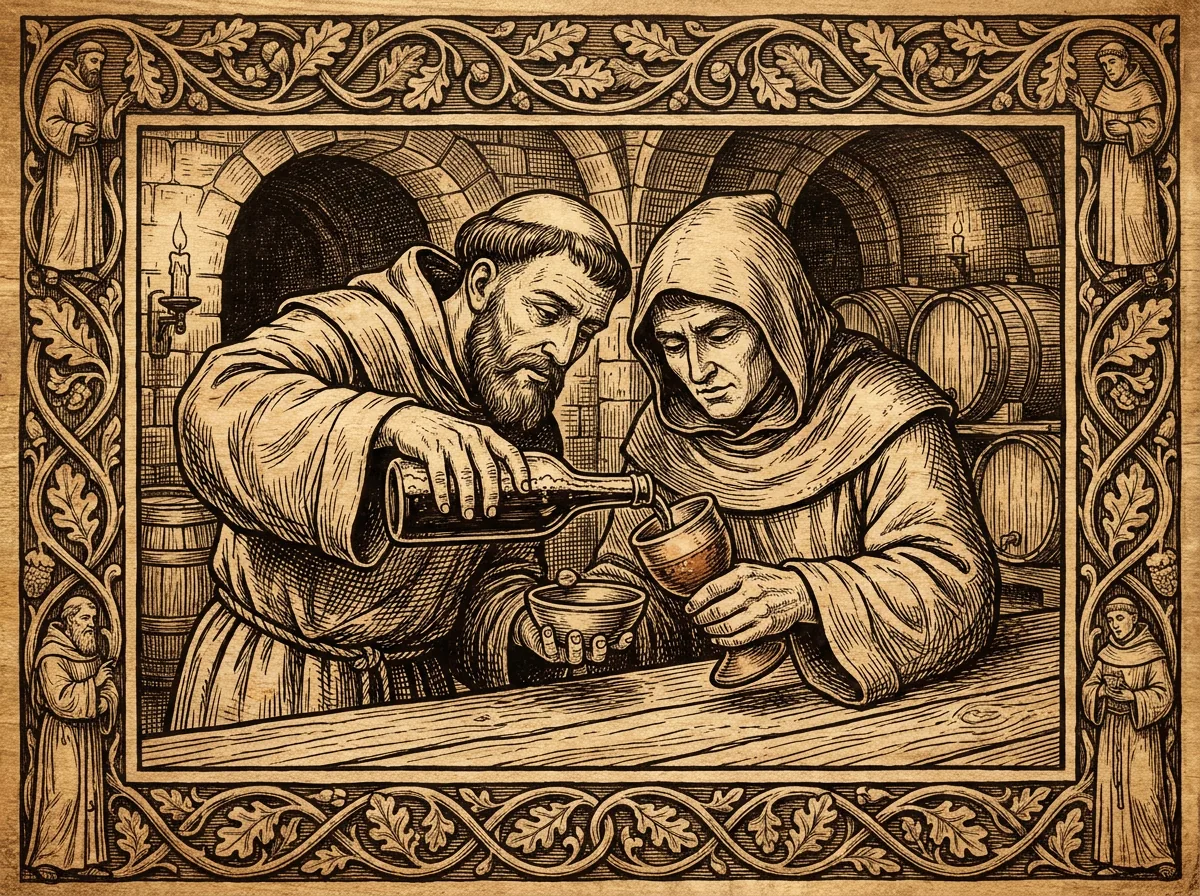
Almost all Trappist beers are bottle-conditioned, which means a yeast sediment settles at the bottom: a clear, compact ring visible when held up to the light. This is not a defect or a sign of poor storage, but it has its own distinct flavor, slightly bitter and bready, which can cloud an otherwise clear profile. For this reason, bottles should be stored upright, in a dark, cool place, for a few days before opening: the yeast compacts at the bottom and stays there.
There's only one correct pouring technique, and it should be done without hesitation. Tilt the glass to about 45 degrees, pour continuously along the side, then gradually straighten the glass when you're halfway to build the head. When you reach the last inch of beer, stop: leave the sediment in the bottle. Never set the bottle down mid-pour, as the movement will stir up the sediment. If, however, you prefer the more rustic and full character that the yeast provides, gently swirl the bottle at the end and pour that in too—it's a legitimate choice, as long as it's a choice and not a distraction.
At the Table: Pairings That Work
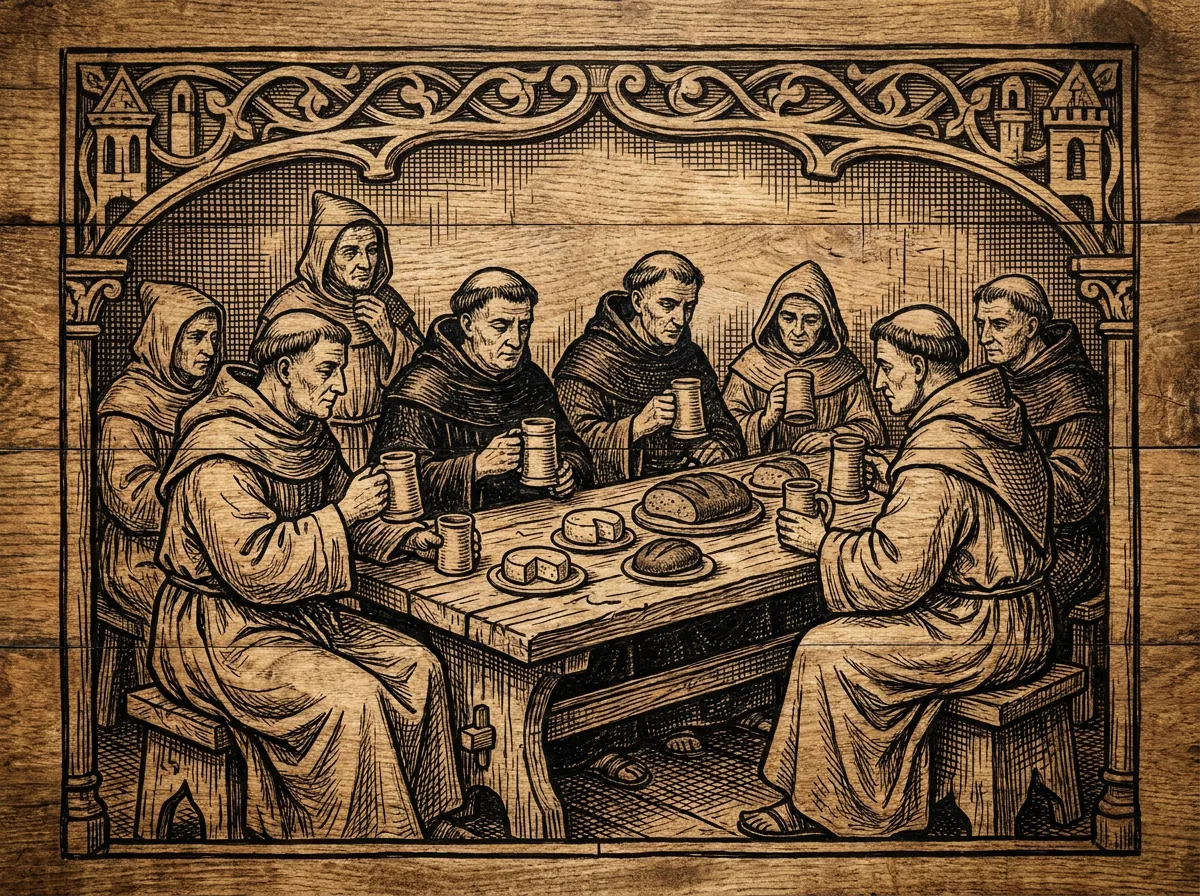
The oldest and most reliable pairing is with cheese, especially washed-rind cheeses and abbey cheeses: their richness and slightly pungent notes find a perfect counterbalance in the beer's carbonation, and the malt's sweetness mellows the salt. An amber dubbel holds up beautifully to a semi-aged cheese, while a drier, more alcoholic tripel cleanses the palate from something creamy and intense. There's no need to invent anything complicated: dark bread, an honest cheese, and a full glass are already a complete monastic meal.
For meats, the rule of correspondence applies: long stews, game, braised dishes, and caramelized meats call for dark beers and quadrupels, where notes of plum, raisin, and caramel echo those of the cooking. Blondes, agile and spicy, pair better with white meats, fatty fish, roasted vegetables, and herb-based dishes. For dessert, aim for dark chocolate with a high-alcohol dark beer: it's an almost obvious pairing but it works every time. The only trap to avoid is very spicy dishes, which with alcohol amplify each other to the point of overpowering everything else.
Explore related products
Products mentioned in this article
- Trappist Beer Monaci delle Tre Fontane 33 clfrom €5.49trappist-beers-and-abbacy
- Tynt Meadow English Trappist Dark Beer 33 clfrom €5.08trappist-beers-and-abbey
- Trappist Beer Zundert 10 brown 33 clfrom €4.91trappist-beers-and-monastery
- Zundert 8 Amber High Fermentation Beer 33 clfrom €4.13trappist-and-abbey-beers
- Tynt Meadow Beer Goblet 33 clfrom €6.90trappist-beers-and-monastery
Frequently asked questions
You can, but you'll miss most of the experience. In the bottle, aromas don't have space to release and the head doesn't form, so you'll primarily perceive alcohol and carbonation. Even a generic glass is better than the glass neck: the important thing is to have air surface and a rim that directs the aromas towards your nose.
No, it's normal and actually a good sign: it indicates that the beer is bottle-conditioned with live yeast, unfiltered and unpasteurized. The sediment is edible, and some appreciate it for the character it adds. If you prefer a clear glass, just stop pouring at the last inch of beer.
More alcoholic and darker versions, like dubbels and quadrupels, can mature for years, developing notes of spirits-soaked fruit, leather, and sherry. Lighter, clearer ones should be drunk young, within a few months, as their value lies in their aromatic freshness. In any case, store bottles upright, in the dark, between 10 and 14 °C, and away from temperature fluctuations.
About two or three fingers, which is a good third of the glass's height. The head isn't wasted space: it acts as a lid, retaining volatile aromas and protecting the beer from oxidation as you drink it. If it disappears in a few seconds, the problem is almost always the glass—detergent or grease residues—rather than the beer.