Ora et Labora: How the Rule of Saint Benedict Created Monastery Products
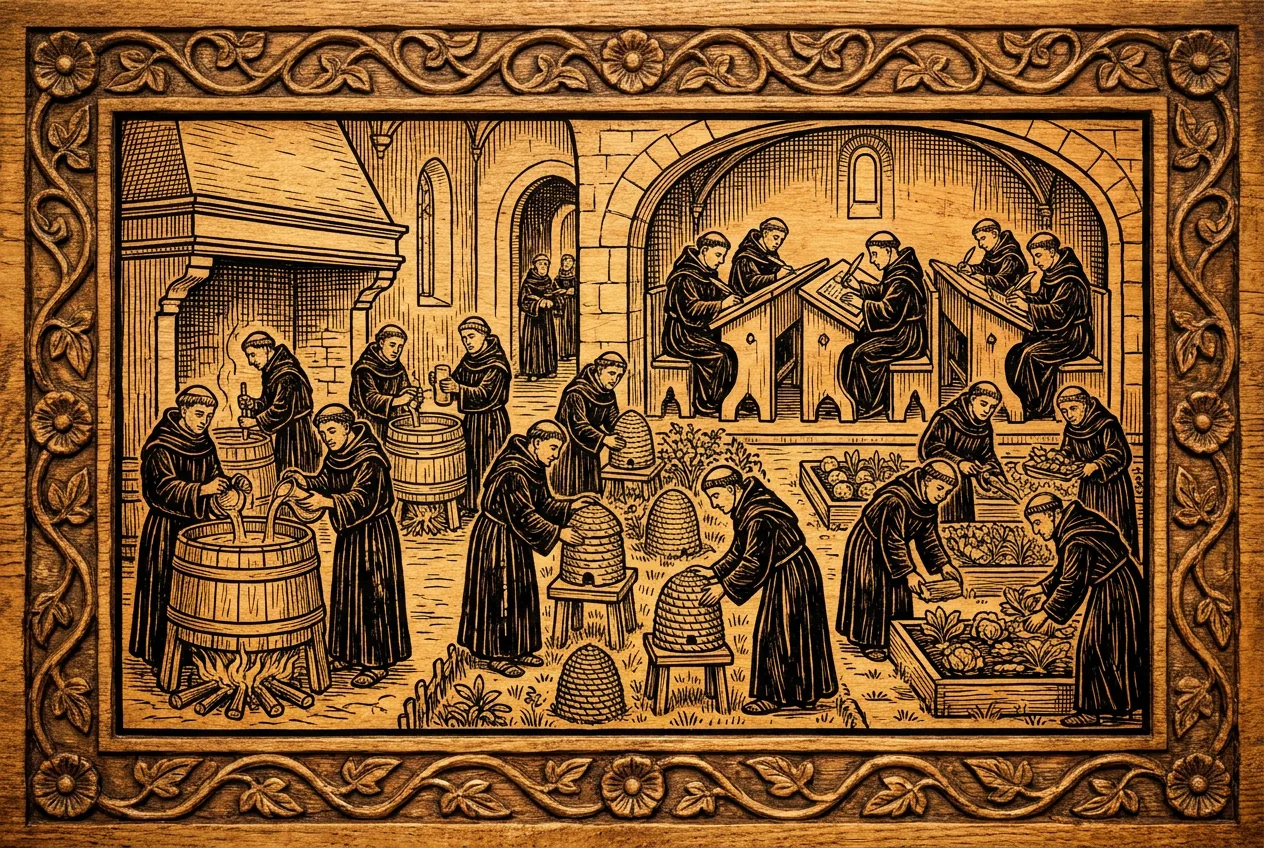
When you taste a Trappist beer, an abbey honey, or an herbal liqueur, you are also tasting an idea. That idea is about fifteen hundred years old, can be summarized in two Latin words, and has shaped the way monks work with land, time, and matter: «ora et labora», pray and work.
A Rule That Makes Work a Form of Prayer
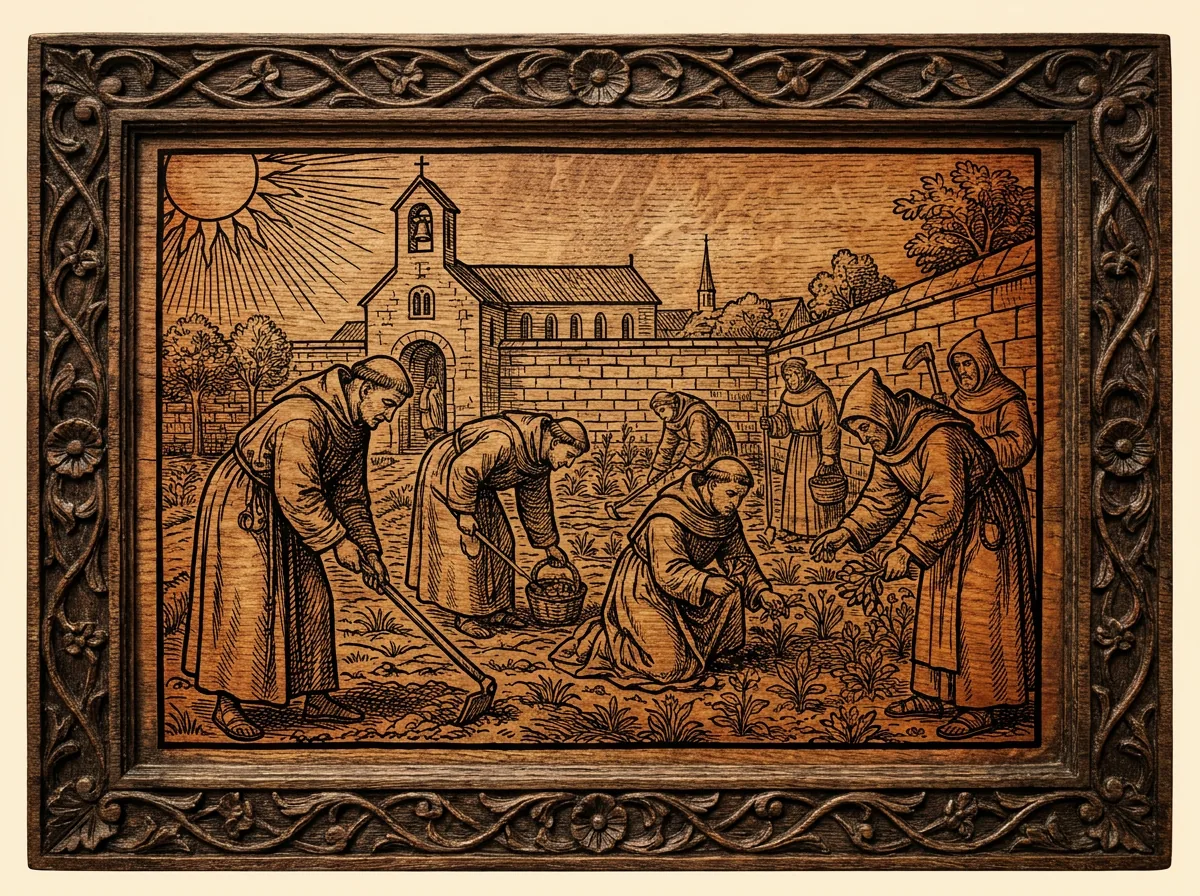
In the sixth century, Benedict of Nursia wrote a rule for monastic communities that would span centuries. At its core is a balance: hours dedicated to common prayer, hours to reading, and hours to manual labor. Idleness, Benedict wrote, is an enemy of the soul, and for this reason, monks must live by the work of their own hands.
Work is therefore not a fallback or merely an economic necessity: it is part of spiritual life. Doing it well, with care and without haste, means honoring what you do. It is this mentality, more than any technique, that explains the almost meticulous care found in monastic products.
Self-Sufficiency: The Monastery as a Small Economy
To pray in peace, a community had to be self-sufficient. Thus, abbeys learned to cultivate cereals and vegetables, raise bees, bake bread, ferment hops, and distill herbs. Every activity arose from a concrete need: feeding the community, hosting pilgrims, caring for the sick.
What was left over was shared or sold, and this is precisely where many of the products we know today originated. Beer served as a safe and nutritious drink, honey as a sweetener and remedy, herbal liqueurs as medicine and digestives. Commerce was a means, not an end.
Knowledge Preserved and Handed Down
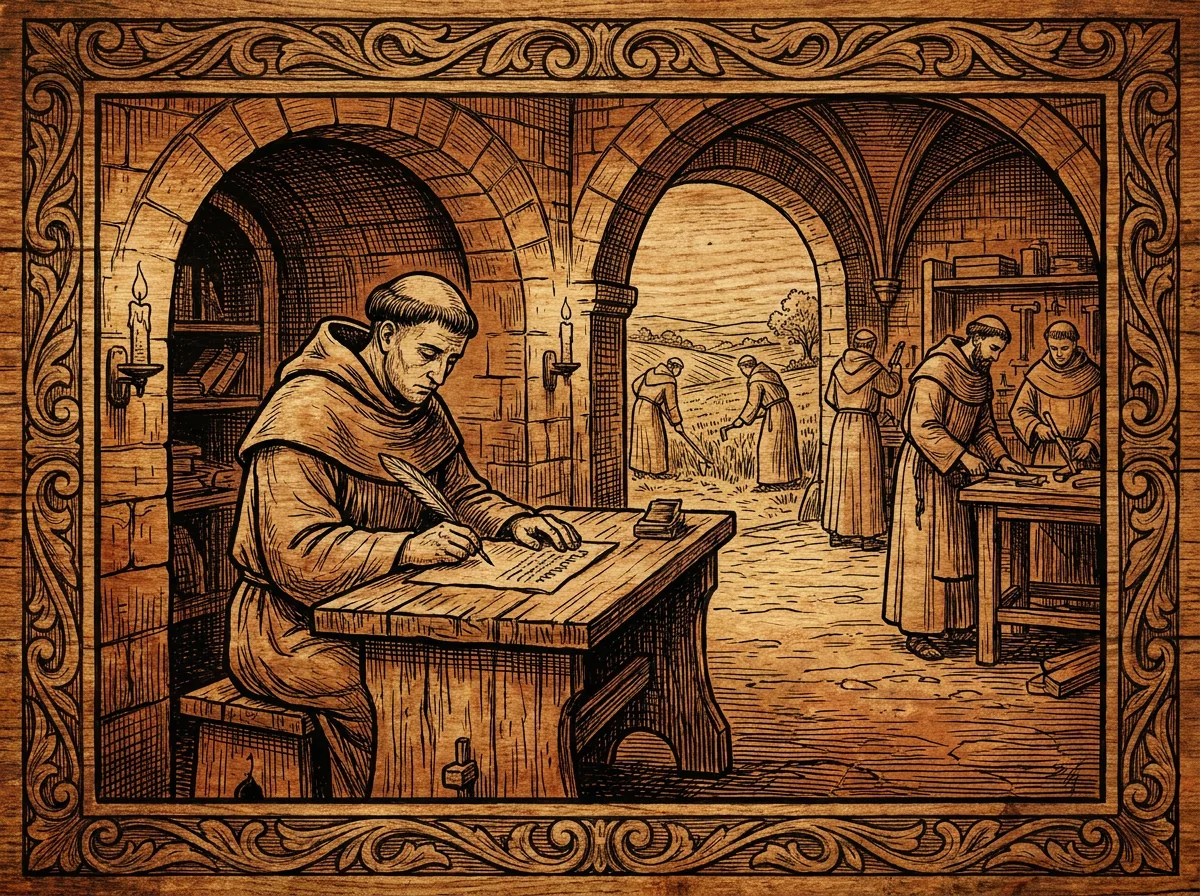
Next to the fields was the scriptorium, the room where monks copied manuscripts. Recipes, herbals, and observations on plants and fermentations were noted and passed down from generation to generation, with a patience that seems rare today. The monastery was at once a laboratory, a library, and a school.
This continuity explains why many recipes have maintained such a recognizable character. They don't chase trends: they perfect a method. The result is craftsmanship made of small improvements repeated for centuries, which can be tasted in every glass and jar.
Why Monastic Products Are Still Special Today
Today, many monasteries continue to live partly from their own work, and the proceeds support the community, charitable works, and building maintenance. Those who purchase an abbey product are therefore choosing something with a specific history and a purpose that goes beyond profit.
The thread connecting beer, honey, herbs, jams, and liqueurs remains the same: carefully selected raw materials, slow processing, attention to detail. Understanding «ora et labora» helps to read every label with different eyes and to taste what you bring to the table with greater awareness.
Explore related products
Products mentioned in this article
- Tynt Meadow English Trappist Dark Beer 33 clfrom €5.08trappist-beers-and-abbey
- MI POL GEL Camaldoli 250 mlfrom €8.73beekeeping products
- Zundert 8 Amber High Fermentation Beer 33 clfrom €4.13trappist-and-abbey-beers
- Reconstituting Flower Pollen 100 gr Camaldolifrom €6.36beekeeping products
- Tynt Meadow Beer Goblet 33 clfrom €6.90trappist-beers-and-monastery
Frequently asked questions
It is a Latin motto that summarizes the Benedictine rule and means «pray and work». It expresses the idea that prayer and manual labor are two parts of a single balanced life.
He was a monk who lived between the fifth and sixth centuries, considered the founder of Western monasticism. His rule guided Benedictines, Cistercians, and Trappists for centuries.
Yes. Trappists are Cistercians of the Strict Observance and follow the Benedictine rule particularly rigorously, with great attention to work and sobriety.
To be self-sufficient and to support the community and charitable works. These productions arise from concrete needs of monastic life and have been perfected over centuries.