Honey, Propolis, and Wax: Treasures from the Monastic Hive
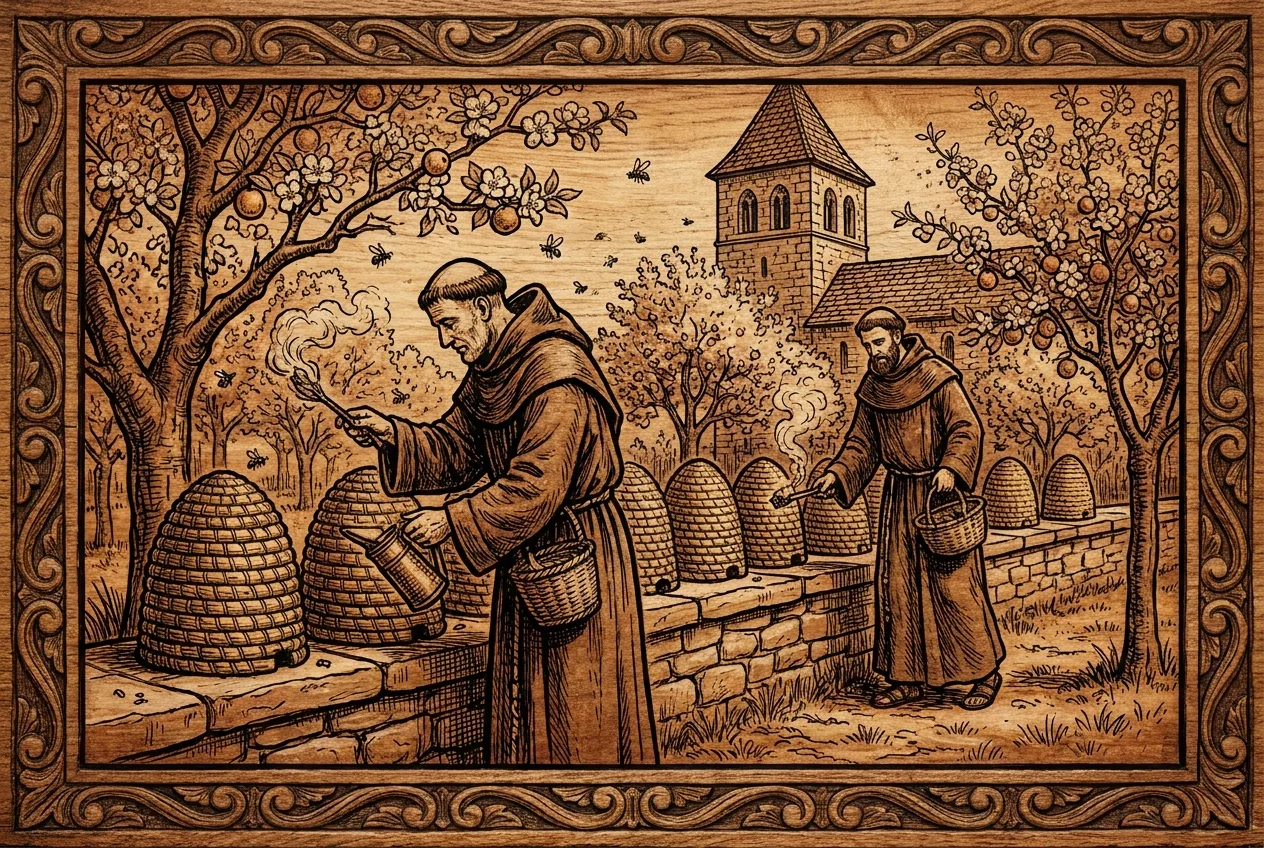
Beekeeping and monastic life have been intertwined for centuries: bees provided wax for altar candles and honey as a precious sweetener in an era without sugar. Even today, many monasteries keep bees and transform what the hive offers into products of recognizable quality.
Why Monasteries Have Always Kept Bees
In monasteries, the bee held a dual value. Wax was used to produce candles that illuminated churches, and for centuries, beeswax was the only material permitted for liturgical candles. Honey, for its part, was the sweetener par excellence and an ingredient for remedies and liqueurs.
This ancient relationship has made monks expert and attentive beekeepers. Monastic beekeeping tends to be small-scale, respectful of the bees' rhythms and the surrounding territory — often hilly and wooded areas far from intensive agriculture.
What Comes from the Hive
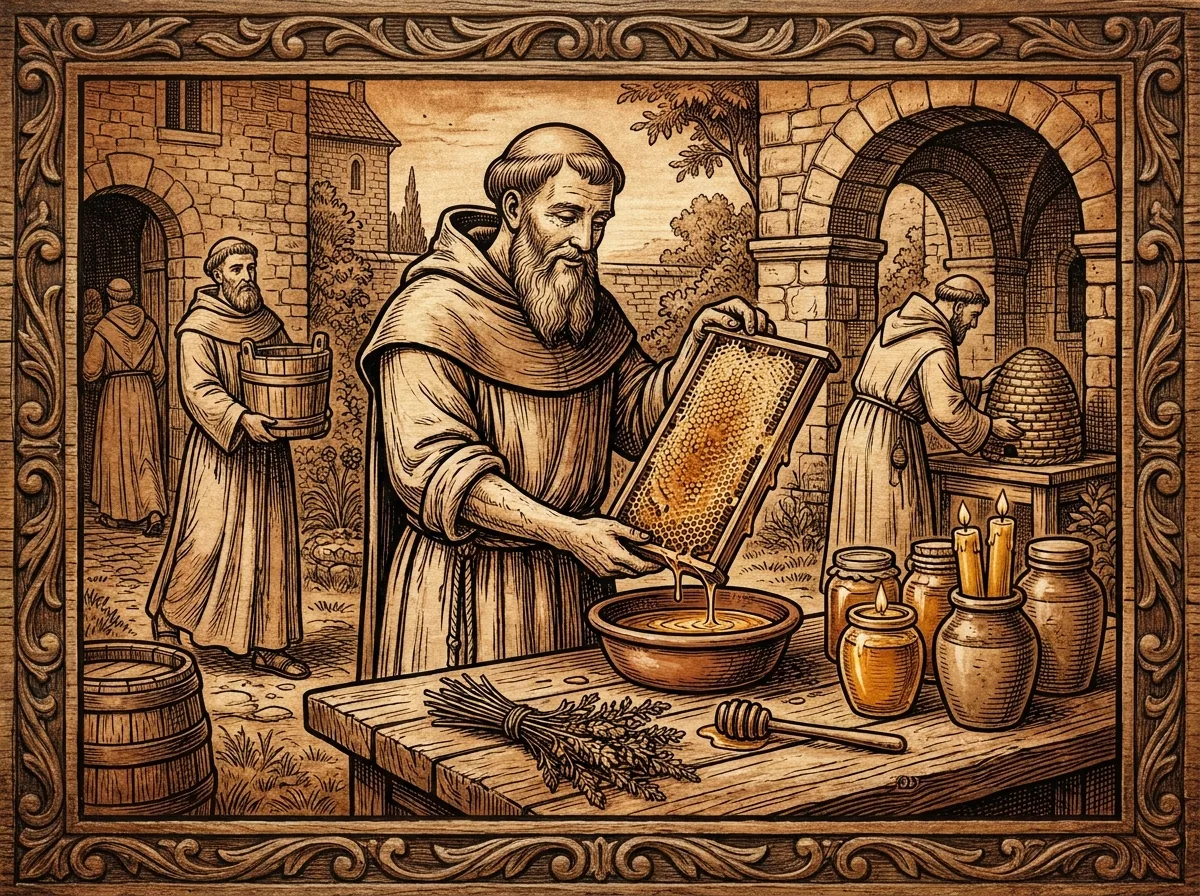
Honey is the best-known product, and its character changes depending on the flowers foraged: delicate and clear acacia, bold and amber chestnut, aromatic wildflower. Each variety tells the story of the landscape it comes from.
But the hive offers much more. Propolis is the resin bees use to protect the hive, valued for its properties. Pollen, collected by bees, is rich in nutrients. Royal jelly is the food of queen bees. And beeswax, in addition to candles, is used in natural cosmetics and balms.
How to Recognize Quality Artisanal Honey
Good monastic honey is raw and unpasteurized: excessive heat destroys enzymes and aromas. Crystallization, far from being a defect, is often a sign of genuineness: almost all natural honeys crystallize over time, and some (like acacia) more slowly than others.
Check the declared origin, prefer single-flower honey when looking for a precise aromatic profile, and be wary of suspiciously cheap or perpetually liquid products. Transparency about origin is the best guarantee.
In the Kitchen and Beyond

Monastic honey is best enjoyed raw: on aged cheese, in an evening herbal tea, at breakfast. To preserve its properties, avoid heating it too much. Propolis and pollen, on the other hand, are used as natural supplements, following the instructions provided.
Finally, beeswax completes the circle: from altar candles to lip balms and natural cosmetics, it remains one of the most versatile ingredients the hive offers.
Explore related products
Products mentioned in this article
- MI POL GEL Camaldoli 250 mlfrom €9.19beekeeping products
- Aromatic Oil with 31 Herbsfrom €18.70cosmetics-and-essential-oils
- Reconstituting Flower Pollen 100 gr Camaldolifrom €6.70beekeeping products
- Camaldoli Snow Toothpaste 100 mlfrom €7.39cosmetics-and-essential-oils
- Millefiori Honey 1000 gr Camaldolifrom €14.70beekeeping products
Frequently asked questions
In addition to honey, the hive provides propolis, pollen, royal jelly, and beeswax, used for candles, cosmetics, and natural balms.
No, quite the opposite: almost all natural honeys crystallize over time. It is often a sign of genuineness, not a defect.
Historically, for wax, the only material permitted for liturgical candles, and for honey, a precious sweetener and ingredient in remedies and liqueurs.
Look for raw and unpasteurized honey with a declared origin; crystallization is normal, while a perpetually liquid and very cheap product should be evaluated carefully.