Natural Remedies from Monasteries: The Great Herbal Tradition
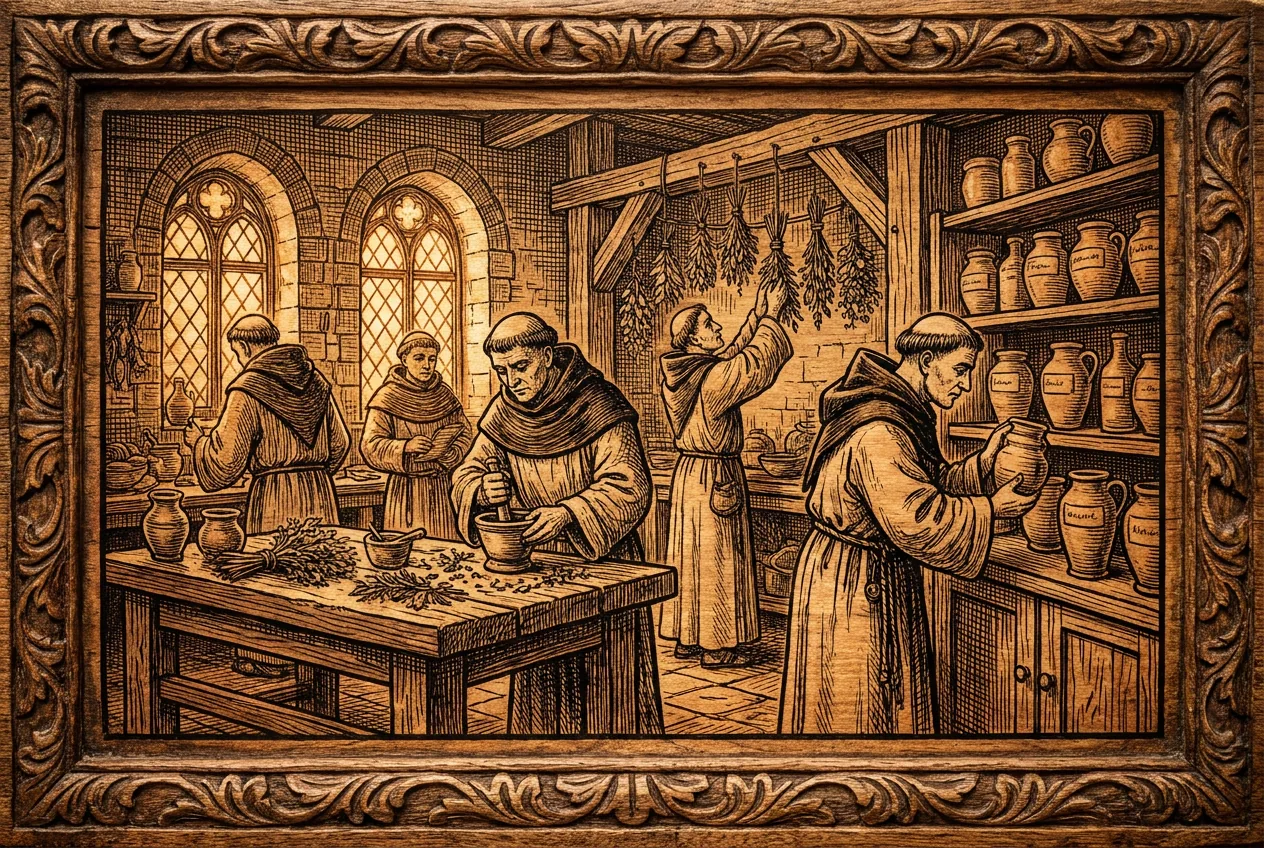
Before pharmacies as we know them existed, those who were ill would knock on a monastery's door. Behind those walls were three rare things: a methodically cultivated garden, a library that preserved in writing what was elsewhere passed down orally, and men and women who had time, discipline, and the obligation of charity towards the sick. From this combination, monastic herbalism was born, one of the most tangible legacies the cloisters have left to Europe. Today, that knowledge survives in products we still find on shelves: tinctures, infused oils, calendula ointments, balsamic syrups, herbal bath salts. It's worth understanding where they come from, how they are made, and — just as importantly — what their reasonable place is in everyday life.
The Herb Garden: Pharmacy Begins with the Earth
In the ideal plans of medieval abbeys, a small plot near the infirmary almost always appears: the «herbularius», the herb garden. «Simple» was the technical term for a single medicinal plant, before being combined with others in a compound preparation. These were geometric, orderly beds, each dedicated to a species: sage, rue, mint, hyssop, wormwood, mallow, calendula, lemon balm. The proximity to the infirmary was not accidental: the remedy had to be reachable in a few steps, fresh, and recognizable.
That seemingly rigid order is, in reality, the primary tool for quality. Cultivating each plant in a dedicated space means not confusing it, knowing its cycle, harvesting it at the moment when the useful part is at its peak — flowers in bud, roots at the end of the season, leaves before flowering. The same logic survives in monasteries that still cultivate their own herbs today: they know exactly what's in a bag because they sowed, harvested, and dried it themselves.
From Manuscript to Counter: Why Writing Made the Difference
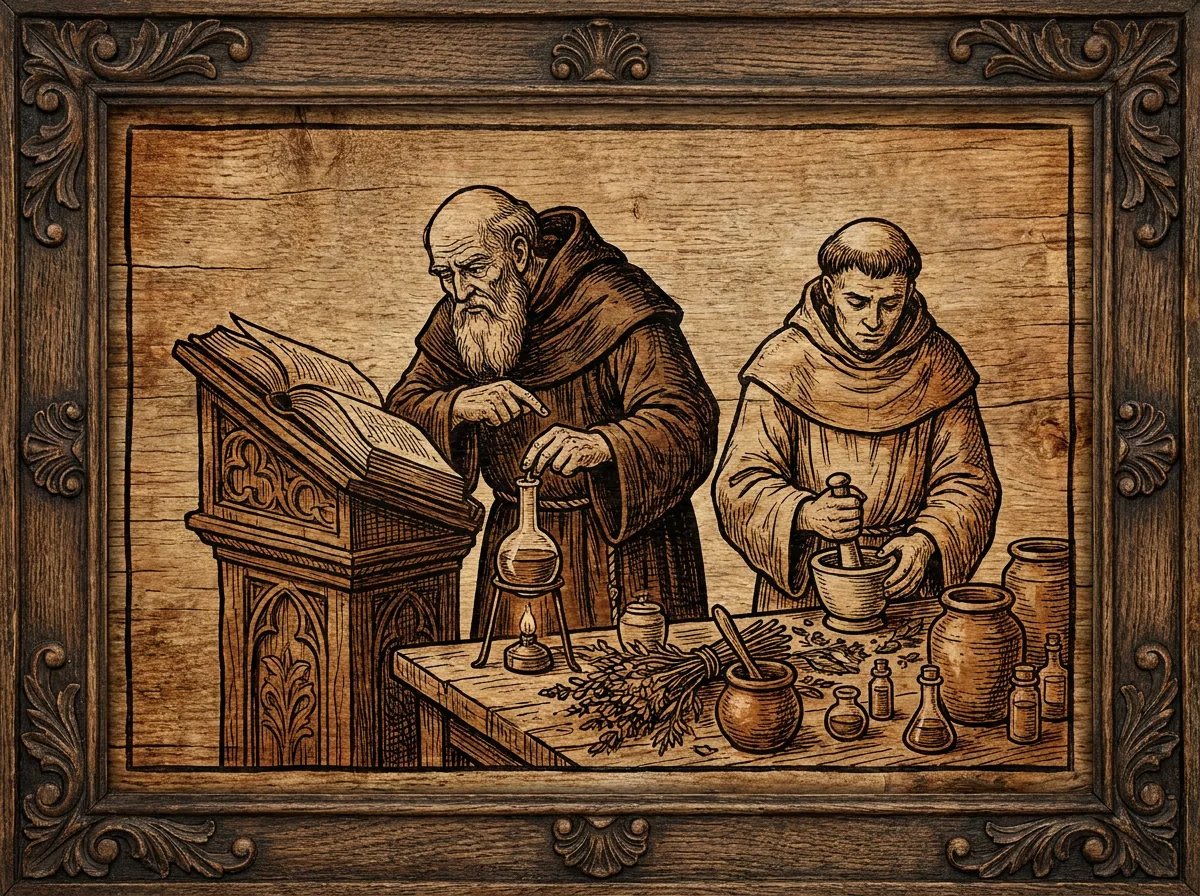
The true monastic specialty wasn't discovering herbs — everyone did that — but writing them down. In the scriptoria, herbals inherited from the ancient world were copied and annotated, with local observations added in the margins: which plant truly grew in that climate, which substitution worked, which dose proved excessive. Names like Hildegard of Bingen, who wrote down an entire system of remedies and rules for life, represent the visible tip of a collective and anonymous work that lasted for centuries.
The result is that a recipe didn't die with its creator. It passed to the next generation, corrected, verified, sometimes disproven. It's a primitive but effective form of knowledge accumulation, and it's why certain monastic formulations — an ointment, an herbal bitter, a balm — reach us practically identical in their ingredient list. When we read «according to the ancient abbey recipe» on a label, there's often truly a notebook behind it.
Tinctures, Infused Oils, Ointments: What They Are in Practice
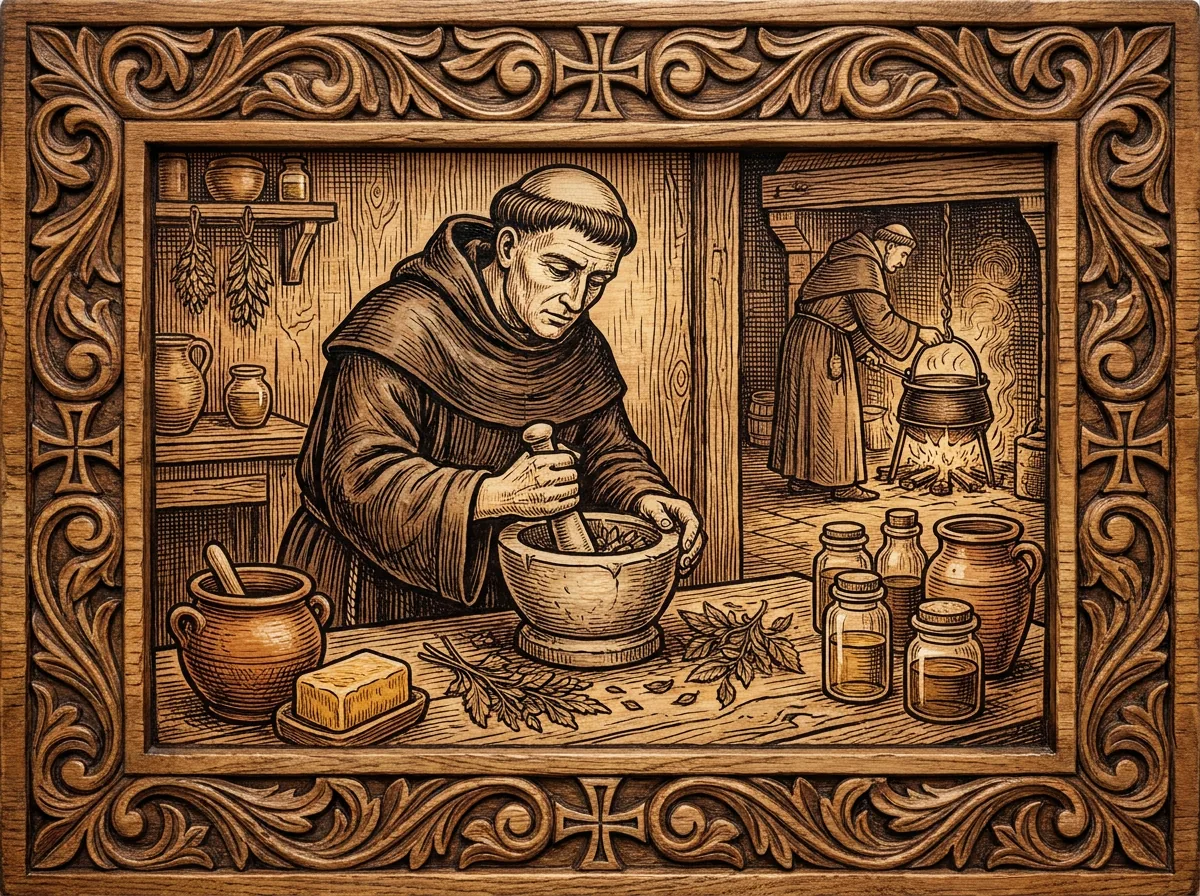
Classic herbal preparations are few and distinguished by the solvent used. A tincture extracts plant principles in alcohol: the plant material is left to macerate for weeks, then filtered and stored in dark dropper bottles. An infused oil does the same work with a vegetable oil, usually olive or sunflower, and is the base for almost all skin preparations: St. John's Wort, calendula, and chamomile are classics. An ointment is made from infused oil thickened with beeswax, in varying proportions depending on the desired consistency.
Alongside these are aqueous forms — infusions for tender parts like leaves and flowers, decoctions for roots and barks that require boiling — and syrups, where sugar acts as both a preservative and a pleasant vehicle. None of these techniques are mysterious: what changes the final quality are the raw material, the respected timings, and cleanliness. Exactly the three things that a monastic community, by habit of life, tends not to rush.
Using Them Wisely: What to Expect and What Not To
A monastic herbal remedy is a product of well-being and tradition, not a medicine. The distinction matters: «natural» doesn't mean «harmless,» and several medicinal plants interact with medications. St. John's Wort, to give the most well-known example, reduces the effectiveness of various common drugs; some bitter herbs are not recommended during pregnancy or with certain pathologies. Faced with a persistent, worsening, or worrying ailment, the right path is a doctor or pharmacist: a good monastery would be the first to say so.
Within these limits, however, much space remains. An evening herbal tea, a calendula ointment for chapped winter hands, an infused oil for a massage, an herbal bitter after a heavy meal: these are small, repeatable gestures that are beneficial primarily because they impose a pause. When choosing a product, look at the label as you would a food label: a short and understandable ingredient list, declared origin, percentage of extract when indicated, dark packaging for what fears light, and an expiration date. An honest abbey remedy doesn't promise miracles and doesn't need to.
Explore related products
Products mentioned in this article
- Propolis Oral Spray Benedettina Herbalistfrom €12.90natural remedies
- Camaldoli Gramigna Herbal Tea Blend 100 grfrom €7.00infusions and herbal teas
- Eucalyptus Syrup 200 mlfrom €17.00natural remedies
- Melissa Herbal Tea from Camaldoli 80 grfrom €5.90infusions and herbal teas
- Propolis alcoholic solution 30 mlfrom €12.90natural remedies
Frequently asked questions
The solvent and therefore the use differ. A tincture extracts active ingredients in alcohol: it keeps for a long time, is dosed in drops, and is primarily intended for internal use or dilutions. An infused oil extracts in vegetable oil through slow maceration, often in the sun, and is almost always used externally — for massages, dry skin, or as a base for ointments. An infused oil has a shorter shelf life than a tincture because oil can go rancid: it should be kept in a dark, cool place and consumed within a year.
No, and no serious herbalist would claim otherwise. Medicinal plants contain real active substances that can interact with medications or be inadvisable during pregnancy, breastfeeding, childhood, or in the presence of specific pathologies. Always read the warnings on the label, and if you are taking medication or have concerns, speak to your doctor or pharmacist before starting. These are wellness products, not substitutes for medical treatment.
Look at four things. The ingredient list: short, readable, with botanical names of plants. Transparency about origin: who cultivates or supplies the herbs, where the processing is done. Packaging: dark glass for tinctures and infused oils, intact seals, clearly visible batch number and expiration date. And the modesty of the promises: a label that announces prodigious effects is a warning sign, not a mark of quality.
Loose herbs for infusion are best within twelve to eighteen months of packaging, stored in a sealed jar, away from light, heat, and humidity: they don't become dangerous afterward, but they lose fragrance and substance. Ointments with beeswax generally last six to twelve months after opening if taken with clean hands. Alcoholic tinctures are the most stable and can last several years. In any case, the label's indication takes precedence over any general rule.