Types of Monastic Honey: Acacia, Chestnut, and Wildflower Compared
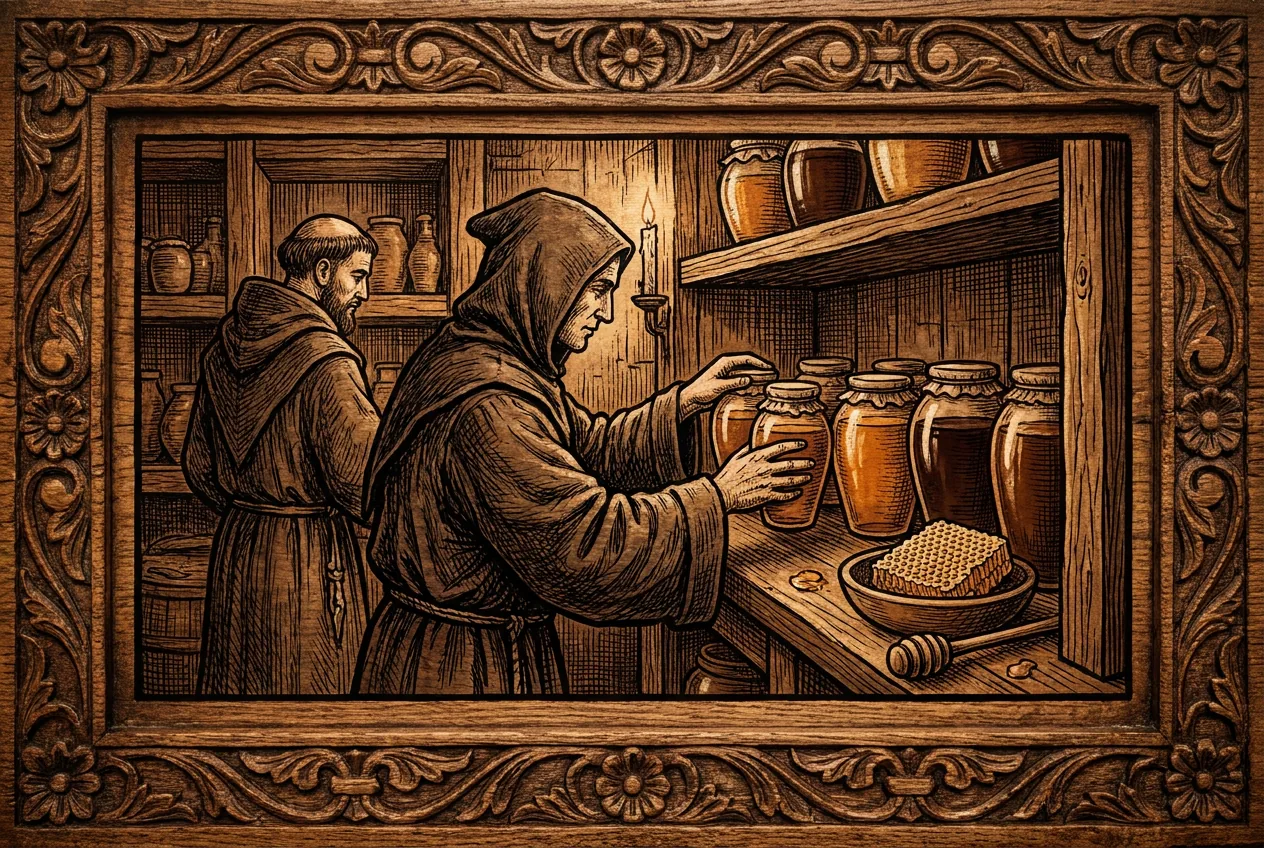
In monastery guesthouses, the honey counter is almost always the busiest, and almost always the most misunderstood. Buyers tend to trust the label or, worse, the color: light equals delicate, dark equals strong. This rough rule works, but it says little about what you'll actually find on your spoon. Honey is the most territorial product there is: it changes with the flowers bees find within three kilometers of the hive, with altitude, with the rain that fell during flowering. Two jars from the same monastery, harvested a month apart, can have opposite personalities. However, three references — acacia, chestnut, and wildflower — are enough to guide you, covering the extremes and the center of the spectrum. Once you understand these, all other honeys fall into place.
Single-Flower or Wildflower: What's the Real Difference?
A single-flower honey is produced when the beekeeper places hives near a dominant bloom and harvests the honey super as soon as that bloom is finished, before the bees start foraging elsewhere. The result is a honey where a single plant dictates its aroma, color, and behavior over time. This doesn't mean absolute purity — no bee respects boundaries — but a clear prevalence, verifiable through pollen analysis. For the monastery, it's a more demanding choice: it requires moving hives, monitoring blooms, and sacrificing part of the harvest.
Wildflower honey, on the other hand, is the honey of those who let bees work throughout the season in the same territory. For years, it was considered the poor cousin of single-flower honey, and wrongly so: a hillside wildflower honey harvested in a mixed forest is often more complex and interesting than an anonymous single-flower variety. Its limitation is repeatability — this year's jar won't be identical to the next — and precisely for this reason, it's worth buying where the territory is known, such as around an abbey that owns its own woods and meadows.
Acacia: The Honey That Stays Liquid
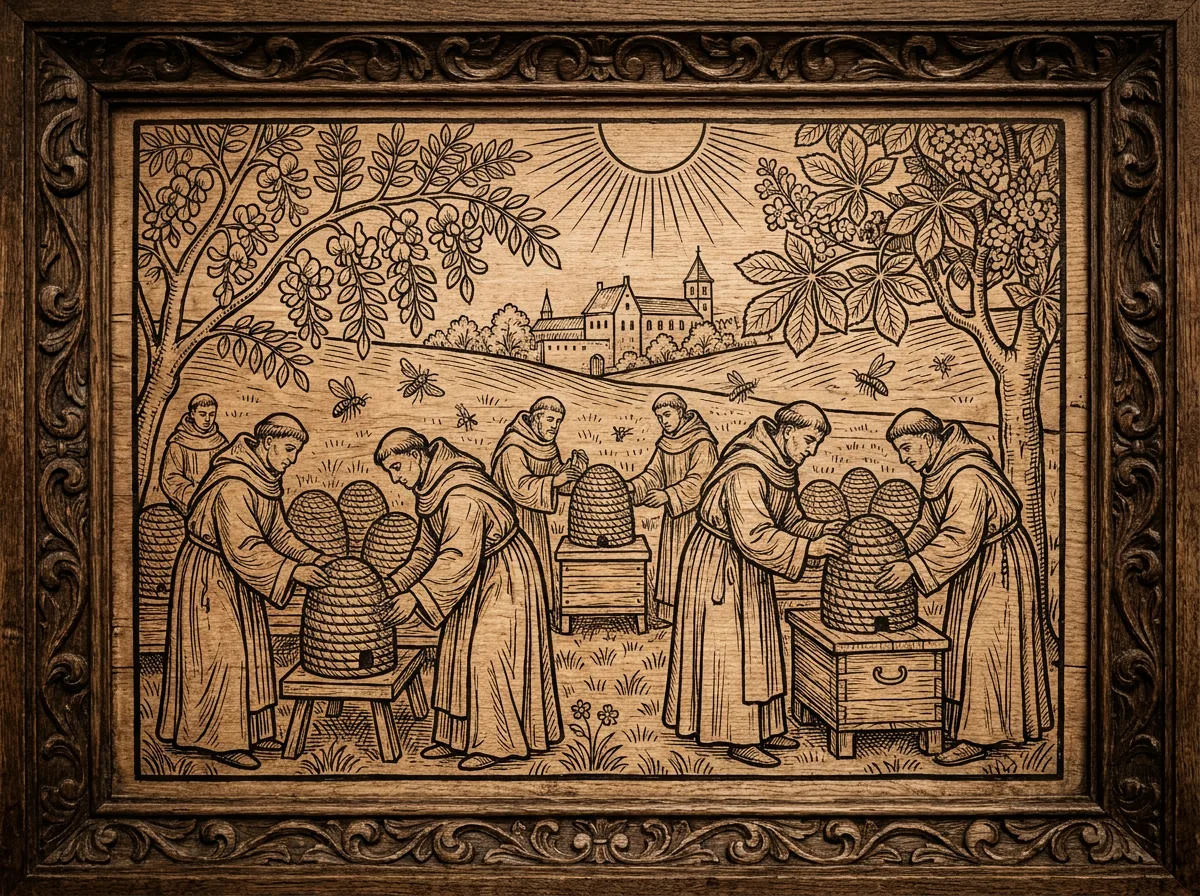
Acacia — more correctly, black locust — yields the lightest honey on the market: almost transparent, with a pale straw yellow, so clear you can read the jar's label through the glass. The aroma is discreet, vaguely floral and like sugared almonds; the flavor is sweet and clean, with no aftertaste, and very low acidity. It's the honey that doesn't overpower anything, and this is both its virtue and its fragility: placed next to a strong cheese, it disappears.
Its most practical characteristic is that it remains liquid for years. This is due to its high fructose content relative to glucose, which greatly slows down crystallization. It's why acacia is the quintessential herbal tea honey: it dissolves instantly, sweetens without altering the infusion, and it's no coincidence that in monastic pantries, it's often found next to jars of herbs. It also works well on yogurt, in delicate pastries, and with very fresh cheeses. A word of caution: if a jar sold as acacia arrives already crystallized, it's fair to ask some questions.
Chestnut: The Divisive Bitterness
At the opposite extreme is chestnut: intense brown color, sometimes almost black against the light, a penetrating and woody aroma recognizable as soon as the jar is opened. In the mouth, it's sweet for only an instant, then a distinct and persistent, tannic bitterness arrives, lingering for a long time. It's the honey that novices put back on the shelf and that enthusiasts buy by the double jar. Rich in minerals and pollen, it crystallizes slowly and irregularly, often with a coarse grain.
Precisely its bitterness makes it extraordinary where sweet honey fails. With blue cheeses and aged pecorino, it holds its own instead of being drowned out; with white meats and in glazes, it adds depth; on bread and butter, it's a breakfast for those who aren't afraid of character. In abbey herbal shops, it's often the recommended honey for the cold season, appreciated for the richness of substances that the deepening of its color brings. If you're trying it for the first time, do just one thing: taste it at room temperature, not straight from a cold cupboard, because cold enhances the bitterness and hides everything else.
Wildflower and the Art of Pairing Them

Wildflower honey is the liquid portrait of a territory, and it changes radically with altitude. In the plains, it tends to be light and sweet, dominated by clover and orchard blossoms; in the hills, it becomes amber, with notes of hay and ripe fruit; in the mountains, it turns dark and resinous, with balsamic hints from rhododendrons and conifers. A good wildflower honey is not an indistinct mixture but a balance: full sweetness, perceptible acidity, a finish that keeps changing.
For pairing, a simple principle applies: go for correspondence or contrast, never for overlap. Light and delicate honeys accompany what is delicate — ricotta, robiola, panna cotta, light herbal teas. Dark and decisive honeys seek an adversary — aged cheeses, blue cheeses, game, dark chocolate. Hillside wildflower honey bridges the two worlds and is the jar to keep open every day. One last methodological tip: taste honeys in increasing order of color, with a different spoon for each and a sip of water in between. The palate adapts quickly, and chestnut tasted first will erase acacia for the rest of the tasting.
Explore related products
Products mentioned in this article
- MI POL GEL Camaldoli 250 mlfrom €9.19beekeeping products
- Camaldoli Gramigna Herbal Tea Blend 100 grfrom €7.00infusions and herbal teas
- Reconstituting Flower Pollen 100 gr Camaldolifrom €6.70beekeeping products
- Melissa Herbal Tea from Camaldoli 80 grfrom €5.90infusions and herbal teas
- Millefiori Honey 1000 gr Camaldolifrom €14.70beekeeping products
Frequently asked questions
No, quite the opposite: crystallization is a natural process and often indicates an untreated honey. It depends on the ratio of glucose to fructose, and varies from flower to flower: dandelion hardens in a few weeks, while acacia can remain liquid for years. If you want it fluid again, simply immerse the jar in warm water, never above 40 °C, to avoid damaging enzymes and aromas.
Acacia, for two reasons: it dissolves quickly and is so neutral that it doesn't overpower the infusion. A light wildflower honey is a good alternative. Chestnut, however, would impose its bitterness on any herb. In any case, it's best to add it when the drink is warm but not boiling, to preserve its properties.
Look at three things. The label: declared origin, producer's name, absence of vague wording like 'blend of honeys from various countries.' The consistency: a single-flower honey should behave as expected from its bloom. The aroma upon opening: a living honey is immediately noticeable, a pasteurized one has a flat or slightly caramelized smell.
Because they are produced on a small scale, often with separate harvests for each bloom, without blending or pasteurization. Added to this is the fact that many communities manage a few hives on their own land and leave part of the stores to the bees instead of replacing them with syrups. The price reflects a lower yield and manual processing.