Evening Herbal Teas: Monastic Blends for Relaxation
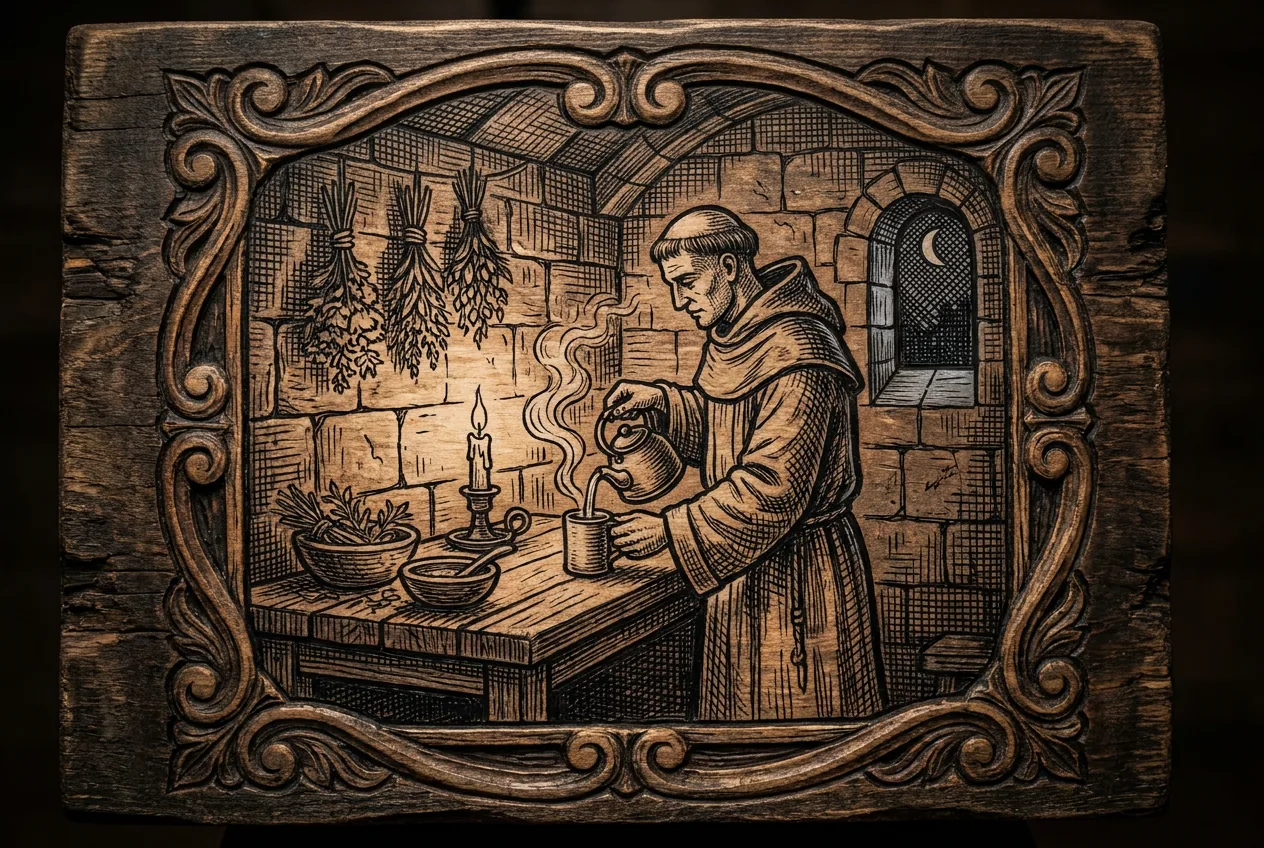
In monasteries, the day doesn't end abruptly: it gently slides towards the silence of Compline, the last prayer before rest. In that quiet hour, for centuries, a warm cup of herbs gathered and dried from the simple garden has found its place. Evening herbal teas are born this way, as a transitional gesture between work and sleep. Let's explore which herbs compose them, how they are combined, and how to recreate the same ritual at your own table.
The Evening Ritual in Monastic Tradition
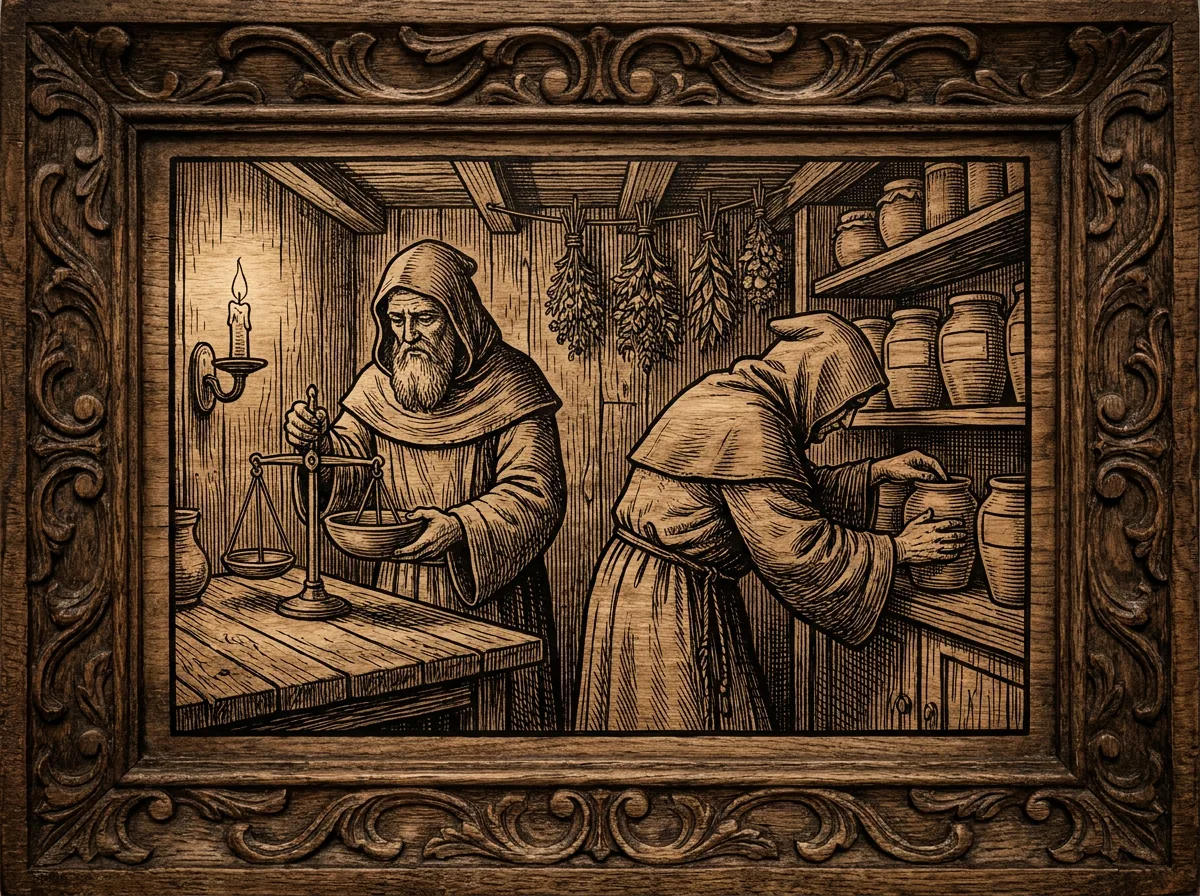
The Rule of Saint Benedict precisely structures time: prayer, work, reading, and rest alternate in a rhythm that leaves no room for haste. After Compline, the great silence begins, and preparing for sleep becomes part of spiritual life. The evening herbal tea fits into this transition as a small act of care, simple and repeated daily.
Herbs were cultivated in the hortus simplicium, the medicinal plant garden that almost every abbey kept next to the infirmary. Monk apothecaries observed the plants, noted their uses, and refined blends from generation to generation. Many of the combinations we find today in abbey herbal teas directly descend from that patient knowledge.
The Star Herbs: Chamomile, Lemon Balm, and Linden
Chamomile is the queen of the evening: its golden flower heads yield a soft, slightly honeyed infusion, which tradition has always associated with relaxation. Lemon balm, with its lemon-scented leaves, adds freshness and a citrus note that lightens the sip. Linden, with its cream-colored flowers and bracts, offers a sweet and floral aroma, almost like honey.
Alongside these three pillars, other herbs often appear: passionflower, with a delicate, herbaceous taste; lavender, to be used sparingly because its scent easily dominates; orange peel or fennel seeds, appreciated after dinner. Valerian, used in some blends, has an intense odor that not everyone enjoys, which is why it is almost always accompanied by more aromatic herbs.
How Abbey Blends Are Created
A good evening blend is not a random sum of calming herbs, but a balance of flavors. Usually, there's a base herb that gives body, like chamomile or linden, one or two aromatic herbs that refresh, like lemon balm or mint, and a final touch that rounds it out, like citrus peel or a pinch of lavender. The proportions are found through experience, by tasting and adjusting.
In monastic laboratories, herbs are harvested at their peak fragrance, dried in the shade in ventilated environments, and stored away from light. Whole or coarsely cut flowers and leaves are preferred, as they retain essential oils better than fine powders. This is one reason why loose abbey herbal tea often has a fuller aroma than tea in bags.
Preparing It Well: Water, Timing, and Small Gestures
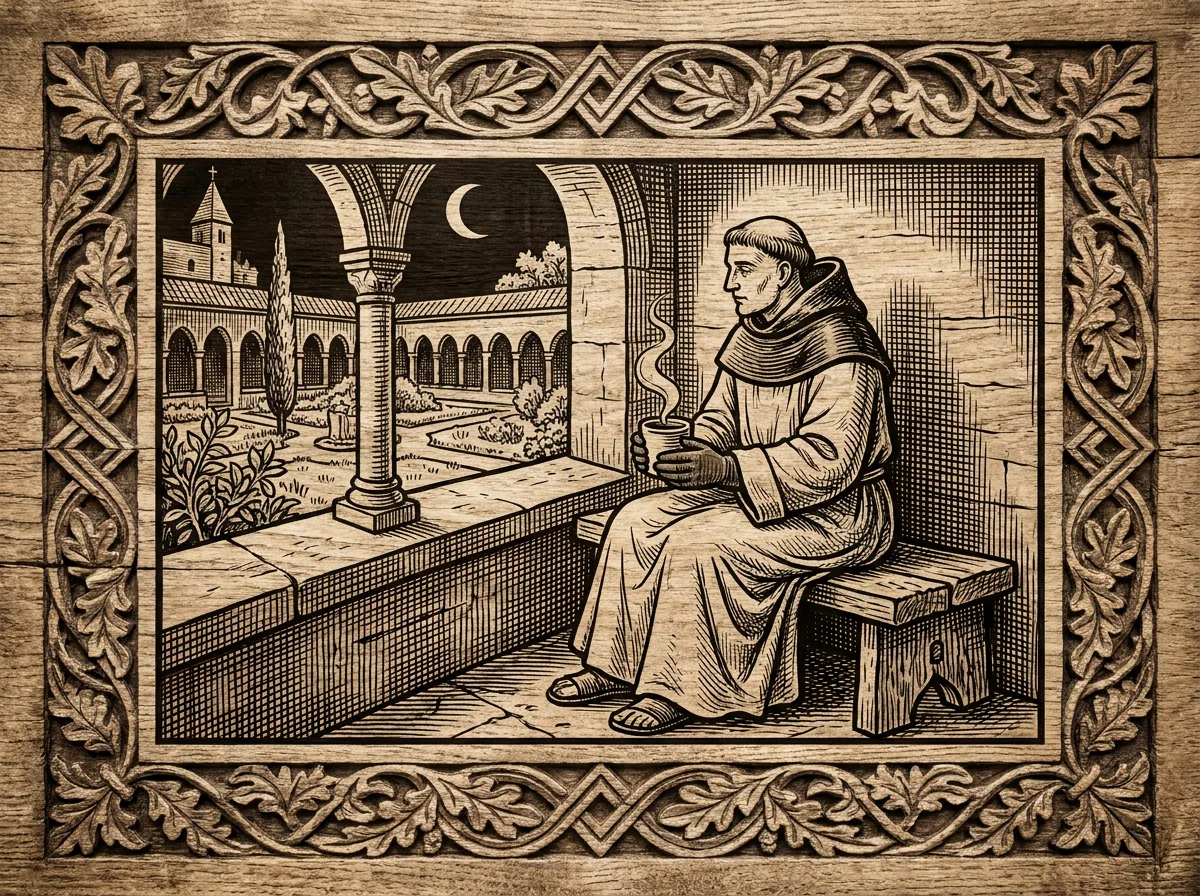
For delicate flowers and leaves, the water should not boil for too long: it's better to bring it to a boil and let it rest for a moment, so as not to disperse the aromas. A level tablespoon of blend per cup is the indicative dose; cover the container during infusion, which for evening herbal teas generally lasts five to ten minutes, to retain the essential oils. Then filter without squeezing the herbs, which would release bitter notes.
The rest is done by the context: low light, a cup held in your hands, a few minutes without screens. Those who like to sweeten can choose a teaspoon of wildflower or linden honey, to be added when the herbal tea is just lukewarm to preserve its aroma. Those taking medication, who are pregnant, or have particular conditions should consult a doctor or pharmacist before regularly drinking blends with valerian or passionflower.
Explore related products
Products mentioned in this article
- Camaldoli Gramigna Herbal Tea Blend 100 grfrom €7.00infusions and herbal teas
- MI POL GEL Camaldoli 250 mlfrom €9.19beekeeping products
- Melissa Herbal Tea from Camaldoli 80 grfrom €5.90infusions and herbal teas
- Reconstituting Flower Pollen 100 gr Camaldolifrom €6.70beekeeping products
- Artichoke Tisane from Camaldoli 80 grfrom €5.90infusions and tisanes
Frequently asked questions
In common language, the terms overlap. Strictly speaking, an infusion is obtained by pouring hot water over herbs and letting them steep, while a decoction involves boiling, suitable for roots and barks. Evening herbal teas, made from flowers and leaves, are almost always prepared by infusion.
Many prefer to drink it half an hour to an hour before bedtime, to enjoy the moment calmly and not have too much liquid in the body when going to bed.
Yes, honey is the most traditional pairing. It's best to add it when the drink is lukewarm and choose delicate honeys, such as acacia, linden, or wildflower, which do not overpower the aroma of the herbs.
In a tightly sealed jar, away from light, heat, and humidity. Stored this way, herbs retain their fragrance for several months; when the aroma fades, it's a sign that it's time to replenish your supply.