Vin Santo and Meditation Wines: The Sweet Patience of Convents
There are wines you don't just drink; you listen to them. Vin Santo and other sweet meditation wines are born from grapes left to dry for months and small barrels forgotten for years in attics. It's a tradition that speaks the same language as monasteries, made of time, silence, and attention to detail. Here's how they're born, why they're so different from any other wine, and how to bring them to the table the right way.
A Wine Born in the Shadow of the Cloister
For centuries, convents and abbeys needed wine: for liturgy, for pilgrim hospitality, and as a small comfort in community life. Alongside table wine, many communities kept a more precious, sweet, and concentrated reserve, capable of lasting a long time without spoiling. From this practical need arose the habit of drying the best grapes and letting the wine mature slowly.
Several hypotheses circulate about the origin of the name "Vin Santo": some connect it to its use during mass, others to pressing around Holy Week, and still others to more legendary tales. None are certain, but all tell the same deep connection between this wine and the religious world, where it was offered to esteemed guests and guarded like a treasure.
Drying: When Grapes Learn to Wait
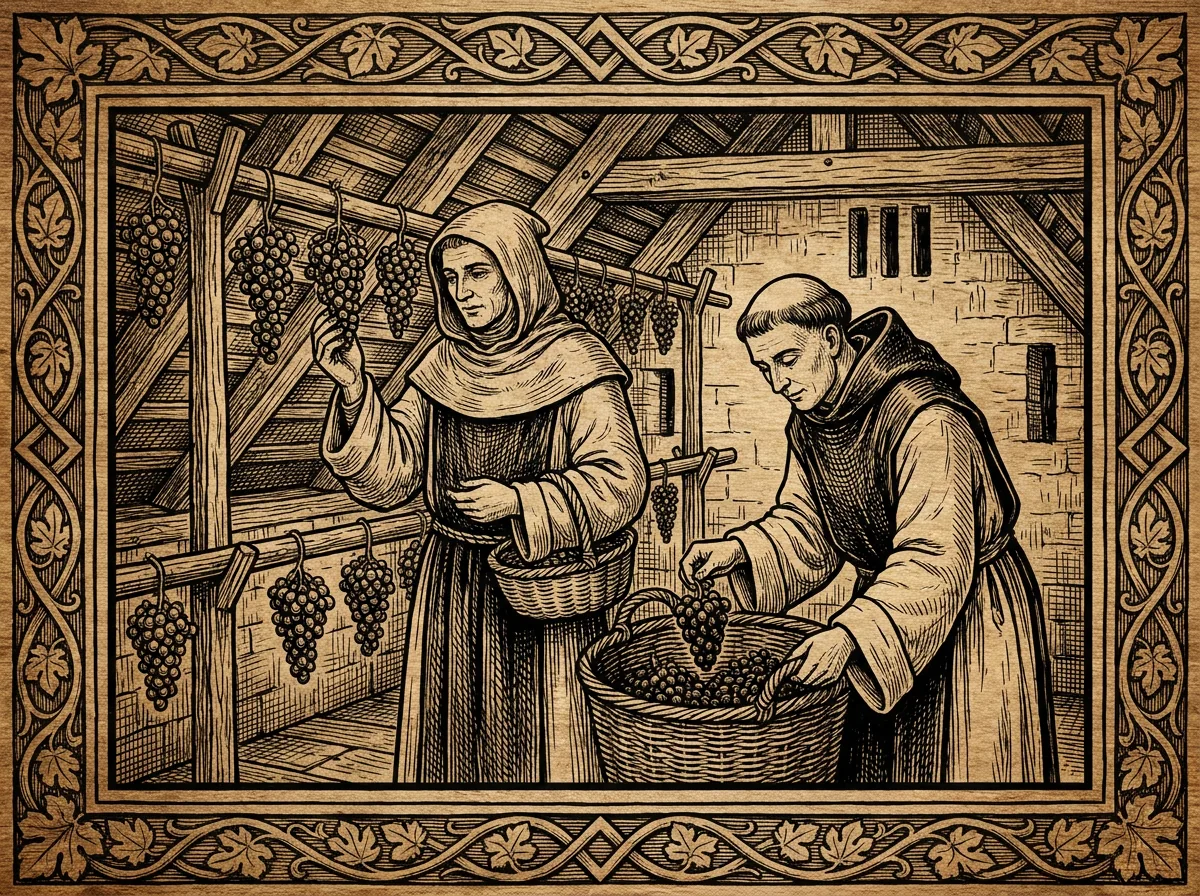
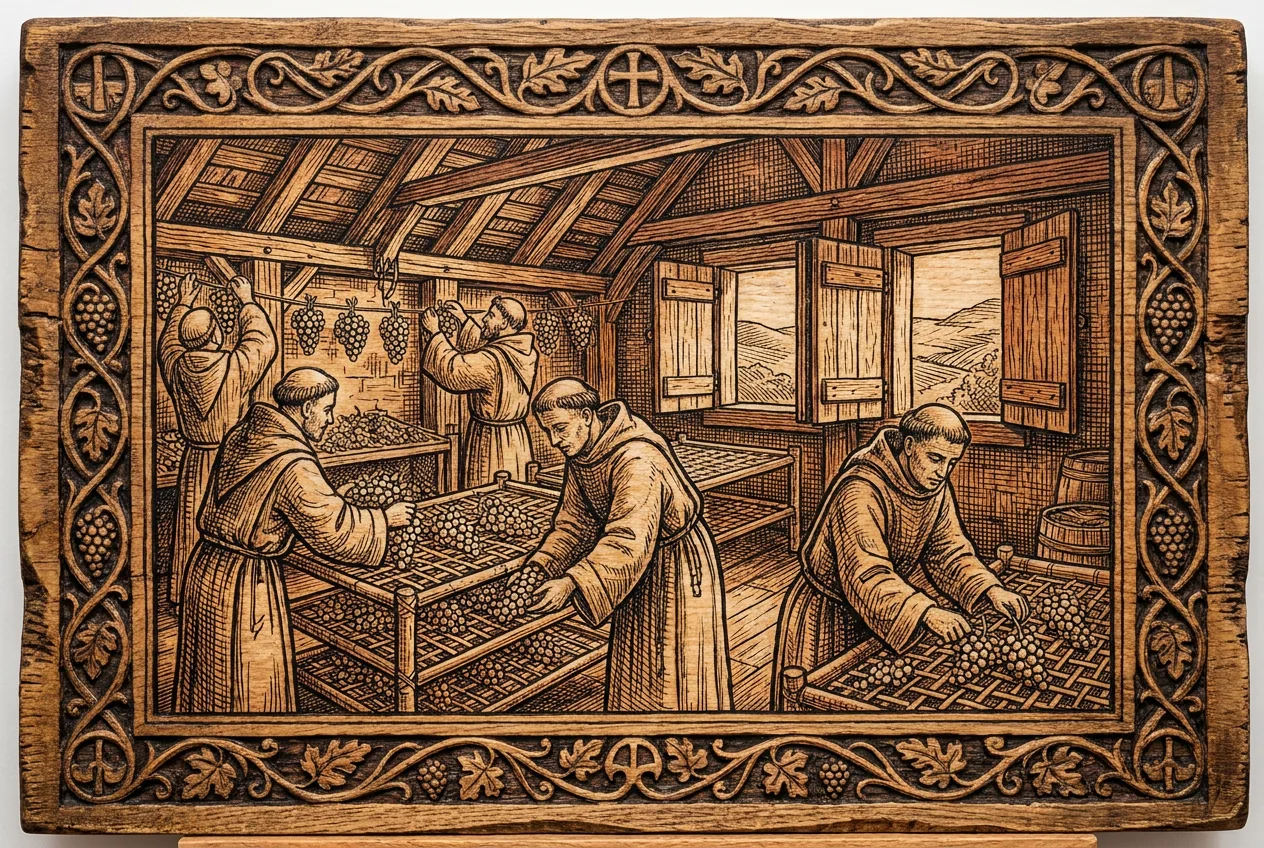
The secret begins after the harvest. The healthiest bunches are laid out on cane racks or hung on wires in well-ventilated granaries, where they remain for weeks or months. Losing water, the grape shrivels and concentrates sugars, acidity, and aromas: from a quintal of grapes, only a small quantity of dense, fragrant must is obtained.
It's a slow and meticulous job, very close to the spirit of monastic life: you need to check the bunches daily, discard any that mold, and circulate the air by opening and closing windows. In the Tuscan tradition, white grapes like Trebbiano and Malvasia are mainly used, while Sangiovese yields the rare rosé version called Occhio di Pernice.
Caratelli, Mother, and Years of Silence

The must is sealed in small wooden barrels called caratelli, often only partially filled. Here, the wine ferments and matures very slowly, exposed to the temperature fluctuations of the attics: hot in summer, cold in winter. The aging time is measured in years, and during this period, the wine is untouched.
Many producers keep a small amount of sediment in the caratelli, known as the "mother," rich in yeasts and sediments from previous vintages, which passes from one cycle to the next like an inheritance. The result is an amber wine, with aromas of dried fruit, honey, dehydrated apricot, and spices, where sweetness is supported by lively acidity and slightly oxidative notes.
How to Serve and Pair a Meditation Wine
A meditation wine should be served cool but not cold, around 12-14 degrees Celsius, in a small tulip-shaped glass that gathers the aromas. Portions are modest: a finger of wine is enough to accompany a long conversation or a moment of quiet at the end of the day. Once opened, a well-corked bottle can be stored for several weeks thanks to its sugar concentration.
The classic pairing is dry almond biscuits, but Vin Santo also excels with blue or aged cheeses, jam tarts, chestnut honey, and not-too-bitter dark chocolate. And it's perfect on its own: that's why it's called a meditation wine, an invitation to slow down that monks have always known.
Explore related products
Products mentioned in this article
- Tuscan Sweet Wine Vinum Aureum 500 mlfrom €24.90white-and-red-wines
- Pine Gem Candies Camaldolifrom €3.99candies-sweets
- Farnetino di Toscana white still wine 750 mlfrom €10.00white-and-red-wines
- Honey and Propolis Candies 100 gr Camaldolifrom €3.99candies-sweets
- Lagrein Wine DOC 2024 Abbazia Muri Gries 750 mlfrom €18.70white-and-red-wines
Frequently asked questions
Both are made from dried grapes, but Vin Santo is distinguished by its long aging in small, often partially filled caratelli, which give it oxidative notes of dried fruit and caramel. Many Passito wines, on the other hand, aim for fresher, fruitier aromas.
Cellar cool, around 12-14 °C. Too cold dulls the complex aromas, too warm accentuates the sweet and alcoholic sensation.
Thanks to its sugar concentration and oxidative character, a well-corked bottle kept away from light and heat remains enjoyable for several weeks.
No. Besides dry sweets, it pairs very well with blue and aged cheeses, chicken liver pâté, and can also be enjoyed on its own as a meditation wine after a meal.