The Wine of Monks: Why Abbeys Have Made Great Wine for a Thousand Years
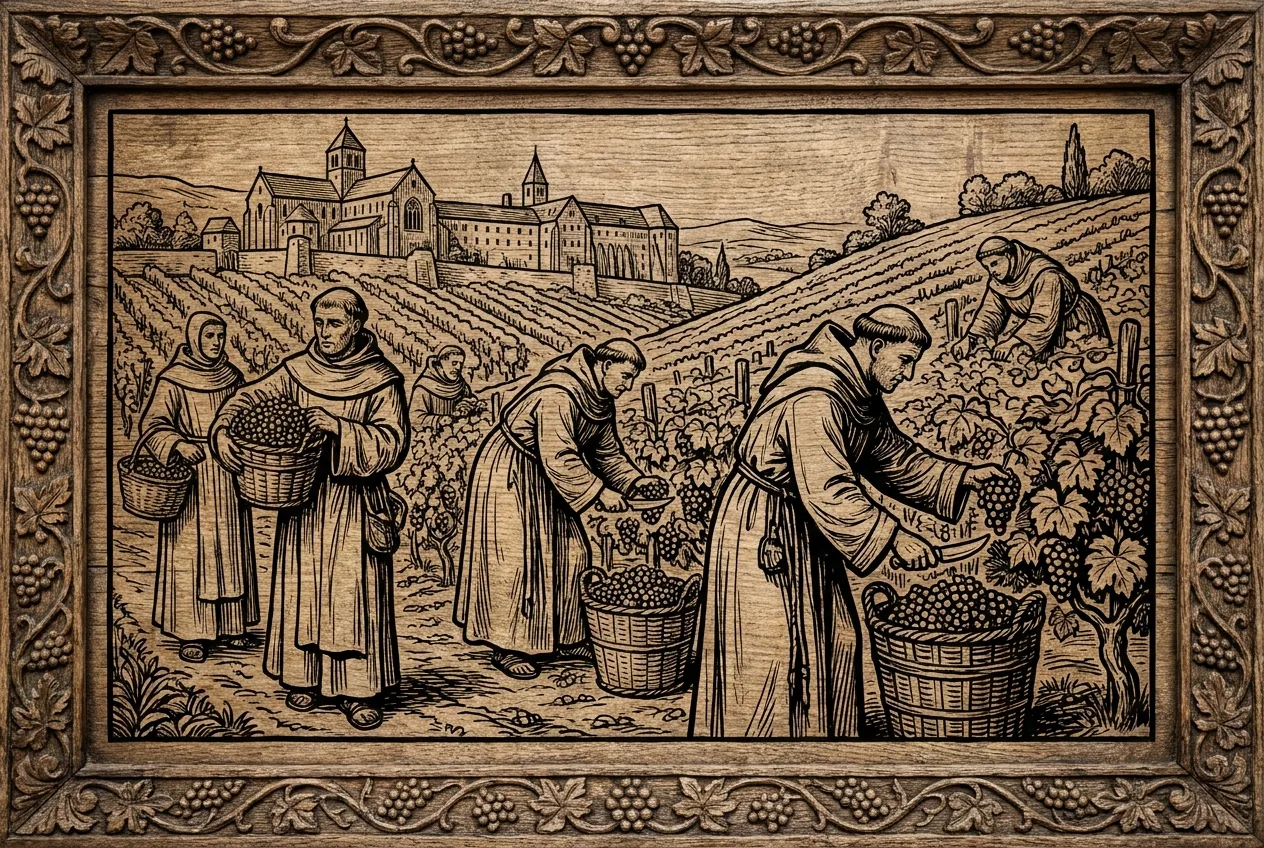
Few beverages tell the story of Europe like monastic wine. For over a thousand years, abbeys have safeguarded the vine, selected the best grape varieties, and transformed the harvest into a daily act of care and patience. Understanding why monks have made great wine for so long helps us appreciate every bottle that bears an abbey's name.
A Thousand Years of Vines: Monks and Wine
When viticulture was at risk of disappearing in much of Europe, it was the monasteries that kept the tradition alive. Wine was essential for celebrating Mass, but also for the table and for hospitality: cultivating it well thus became a daily as well as a spiritual duty. Around the cloisters, generation after generation, the vineyard found attentive and constant guardians.
Monks didn't just preserve vineyards: they improved them. They observed which rows yielded the best fruits, distinguished between soils, and meticulously recorded everything with the same care reserved for manuscripts. This is how some orders helped map out Europe's great wine regions, recognizing the profound connection between a grape variety, a hillside, and its climate.
From Harvest to Press
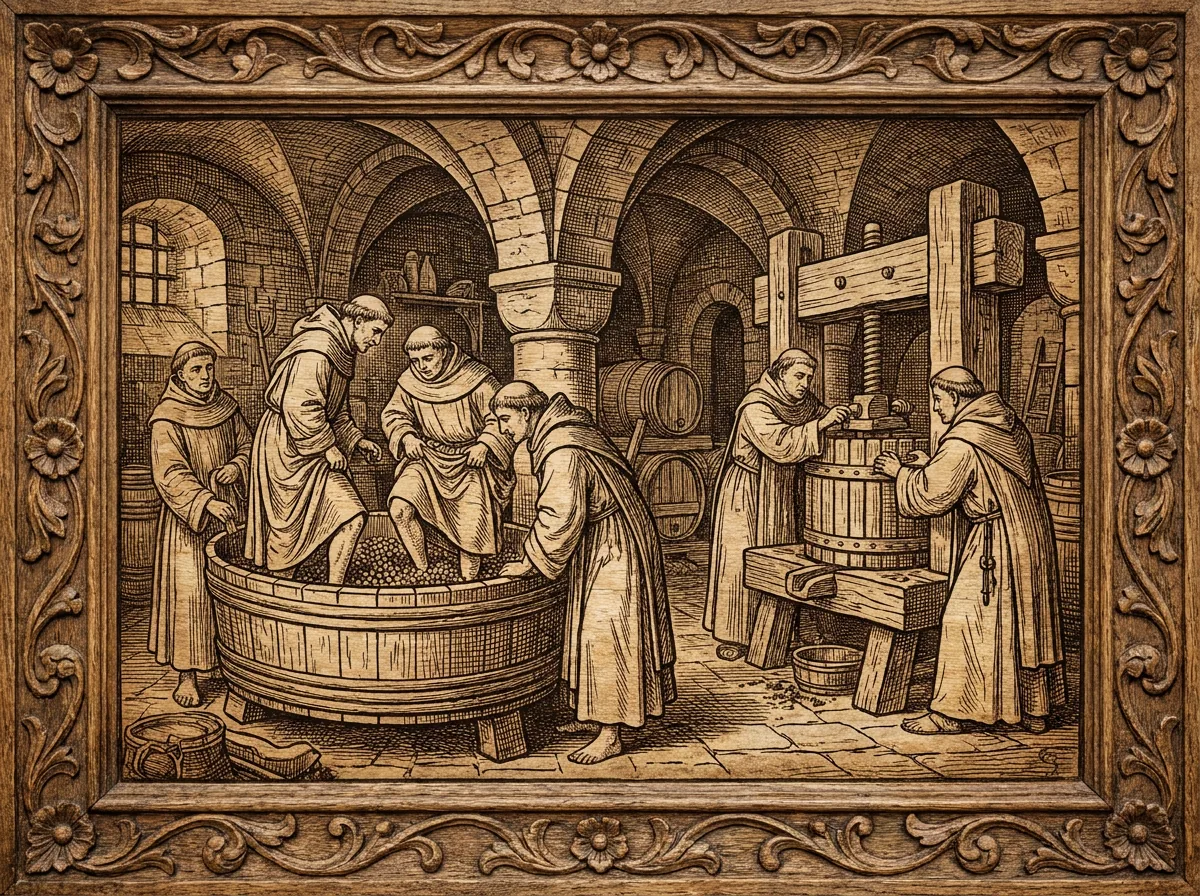
It all begins with the grapes, hand-picked at just the right moment. Waiting for perfect ripeness, cluster by cluster, is the first great lesson of monastic viticulture: one does not force nature, but rather cooperates with it. Wooden baskets full of grapes descend from the rows to the cellar, where the transformation begins.
Pressing, once done by foot or with large wooden presses, releases the must without violently squeezing the berries. It's a delicate act: too much pressure extracts bitter flavors from the seeds and skins. Moderation and gentleness, typically monastic virtues, are also the secret to a clean and harmonious wine.
The Cellar's Time
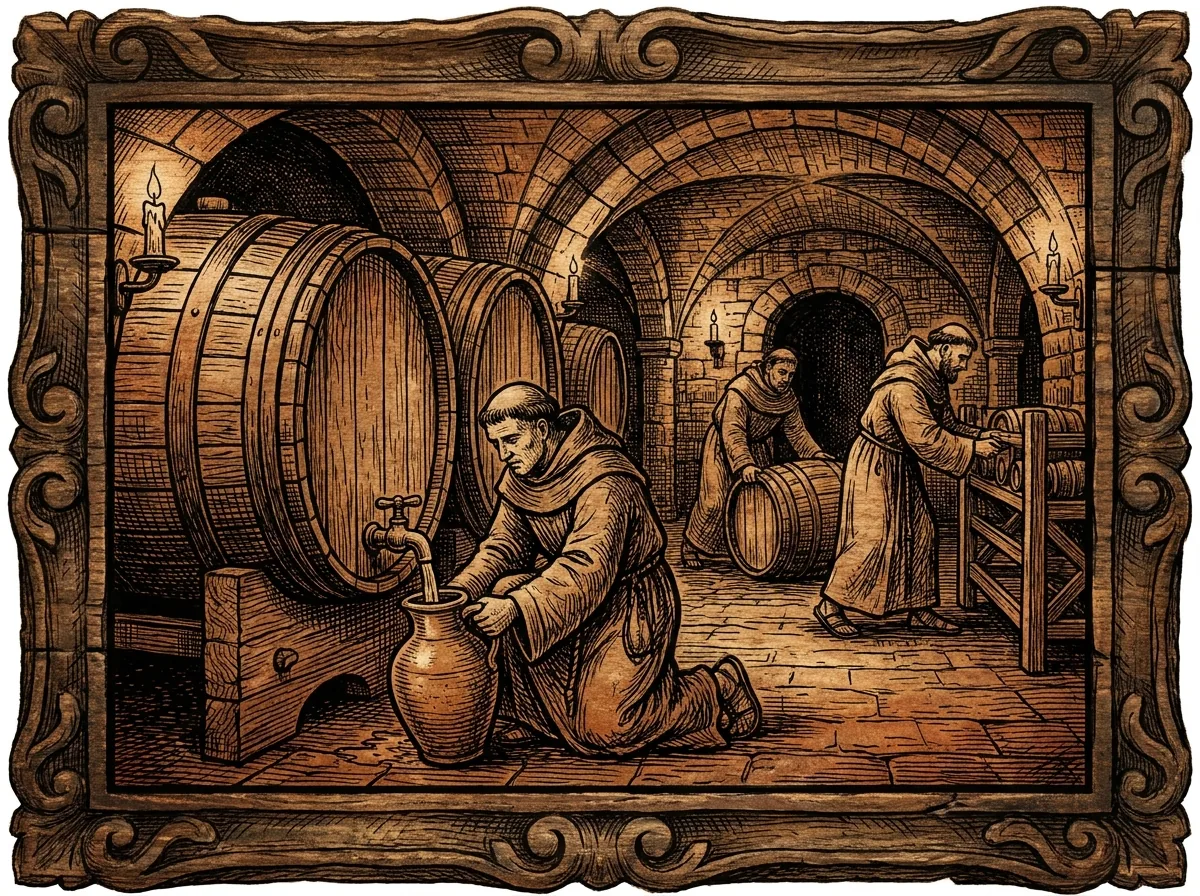
After fermentation, the wine rests. The vaulted cellars of abbeys, cool and dimly lit, are the ideal place: constant temperature and silence accompany a slow and steady maturation. In oak barrels, the wine refines, rounds its edges, and develops aromas that time is in no hurry to bestow.
Here, patience becomes an ingredient. Racking, tasting, waiting again: the cellar monk accompanies the wine without ever imposing, allowing time to play its part. It's the same rhythm that marks the life of the monastery, where every good thing requires waiting.
How to Choose and Serve an Abbey Wine
A good abbey wine is recognized by its care, not by a flashy label. Choosing between a white and a red depends on the occasion: whites, fresh and fragrant, accompany aperitifs, fish, and delicate cheeses; reds, more structured, are best with substantial dishes, roasts, and aged cheeses. Reading the origin and grape variety helps to imagine what to expect in the glass.
Serving also matters. Whites are enjoyed chilled, reds at cellar temperature, never too warm; a wide glass allows the aromas to breathe. Bottles should be stored horizontally, away from light and temperature fluctuations, so that the wine continues to evolve peacefully, just as it would in the quiet of a cloister.
Explore related products
Products mentioned in this article
- Tuscan Sweet Wine Vinum Aureum 500 mlfrom €24.90white-and-red-wines
- Laurus 48 di Camaldoli 700 mlfrom €22.79liqueurs-grappas-digestifs
- Farnetino di Toscana white still wine 750 mlfrom €10.00white-and-red-wines
- Nocino di Camaldoli 700 mlfrom €22.79liqueurs-brandy-digestifs
- Lagrein Wine DOC 2024 Abbazia Muri Gries 750 mlfrom €18.70white-and-red-wines
Frequently asked questions
Wine was necessary for the celebration of Mass, but also for communal meals and to welcome pilgrims. Cultivating vines therefore became part of the daily life and work of abbeys, who dedicated expertise and constancy to it.
It depends on the grapes and the winemaking process. Whites tend to be fresh, light, and fragrant, ideal with delicate dishes; reds are more full-bodied and structured, suitable for flavorful meals. Both share the same artisanal care in production.
Some monasteries continue to produce wine directly, while others entrust their vineyards to trusted wineries that respect their tradition. In both cases, the value lies in the artisanal method and attention to quality that characterize abbey winemaking.
Store the bottle horizontally, in a cool, dark place with a stable temperature, away from heat sources and vibrations. Under these conditions, the cork remains moist and the wine can evolve slowly, preserving its aromas and balance.